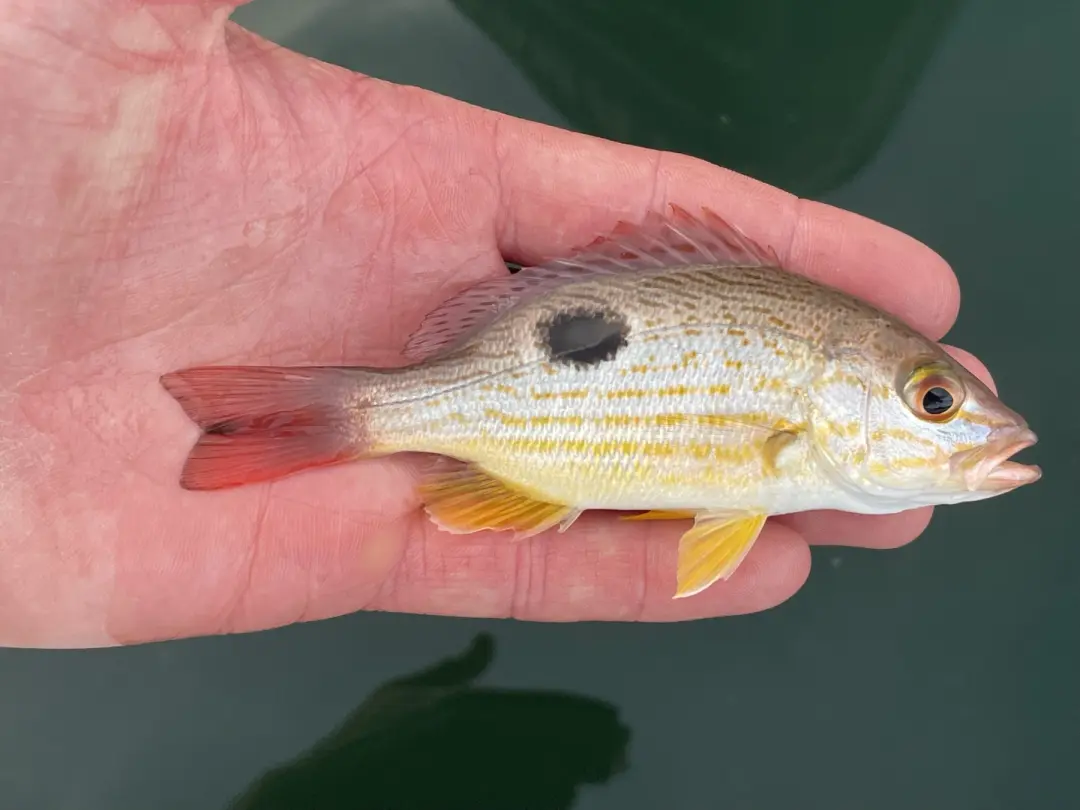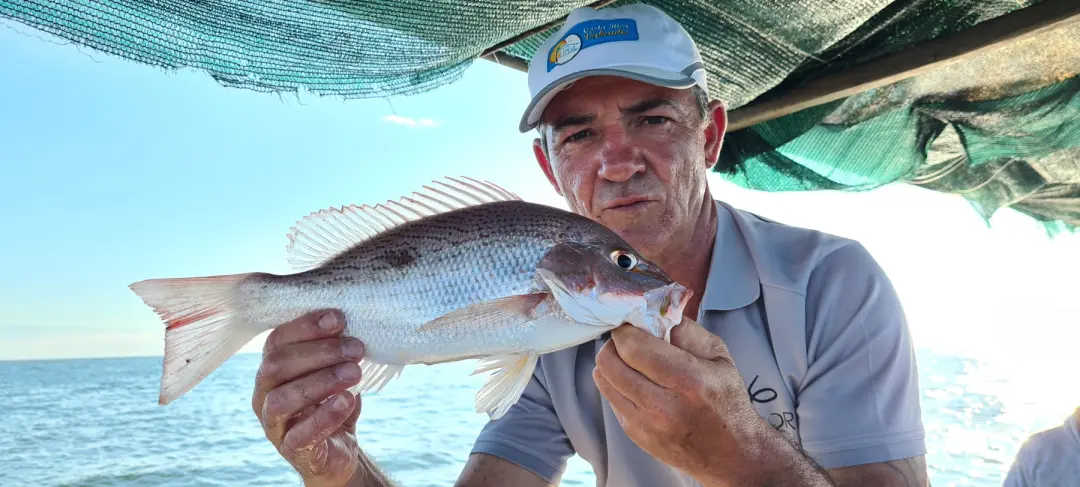


Spotted rose snapper (Lutjanus guttatus)

General data
- Main name: Spotted rose snapper
- Local names: Rose snapper
- Climates: Tropical, Subtropical
- Habitat: Saltwater
- Native: North America, South America
- Distribution: Pacific Ocean
Classification
- Genus: Lutjanus - Snappers
- Family: Lutjanidae - Snappers
- Order: Perciformes - Perches
- Class: Actinopteri - Ray-finned fishes
- Superclass: Osteichthyes - Bony fishes
Description
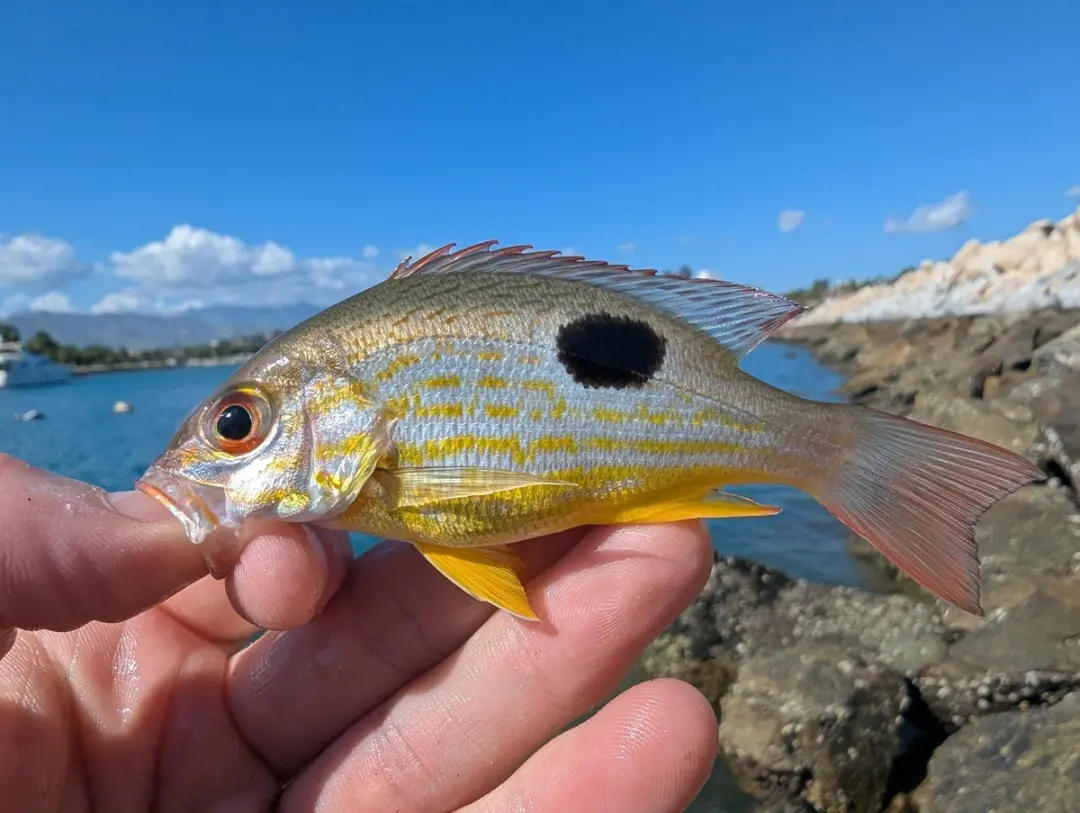
Lutjanus guttatus, commonly known as the spotted rose snapper, is a distinctive reef-associated snapper recognized by its reddish to pink body marked with small dark spots along the upper sides. The body is elongated and moderately deep, with a sloping forehead and strong jaws adapted for predation.
This species is an opportunistic feeder, preying mainly on small fish, crustaceans, and benthic invertebrates around rocky and reef environments.
Lutjanus guttatus is a medium-sized snapper, typically growing to lengths of 30–45 cm. Larger individuals can exceed 60 cm in total length, though such specimens are less common. Its firm flesh and good fighting ability make it an important species for both artisanal fisheries and recreational anglers throughout its range.
The spotted rose snapper is distributed in the eastern Pacific Ocean, from the Gulf of California and the Pacific coast of Mexico southward through Central America to Peru. It is commonly found in coastal waters over rocky reefs, coral formations, and adjacent sandy bottoms, generally from shallow nearshore areas down to moderate depths. Its preference for structured habitats makes it a frequent catch near reefs, headlands, and underwater outcrops.