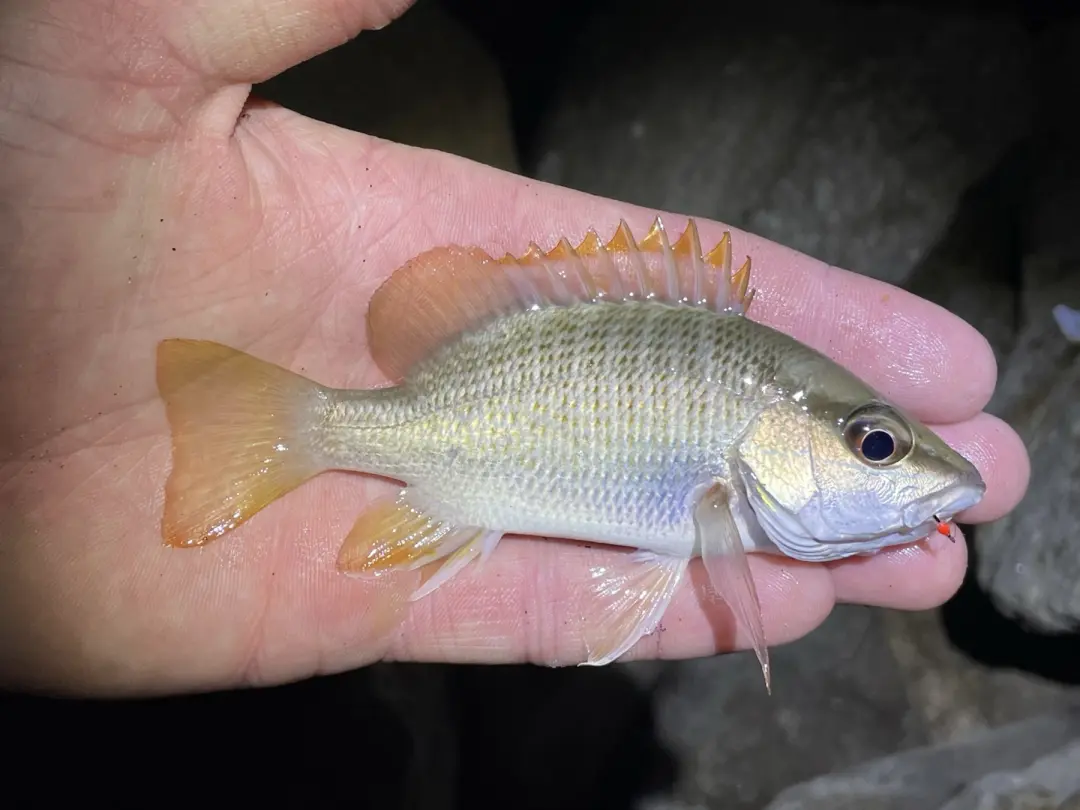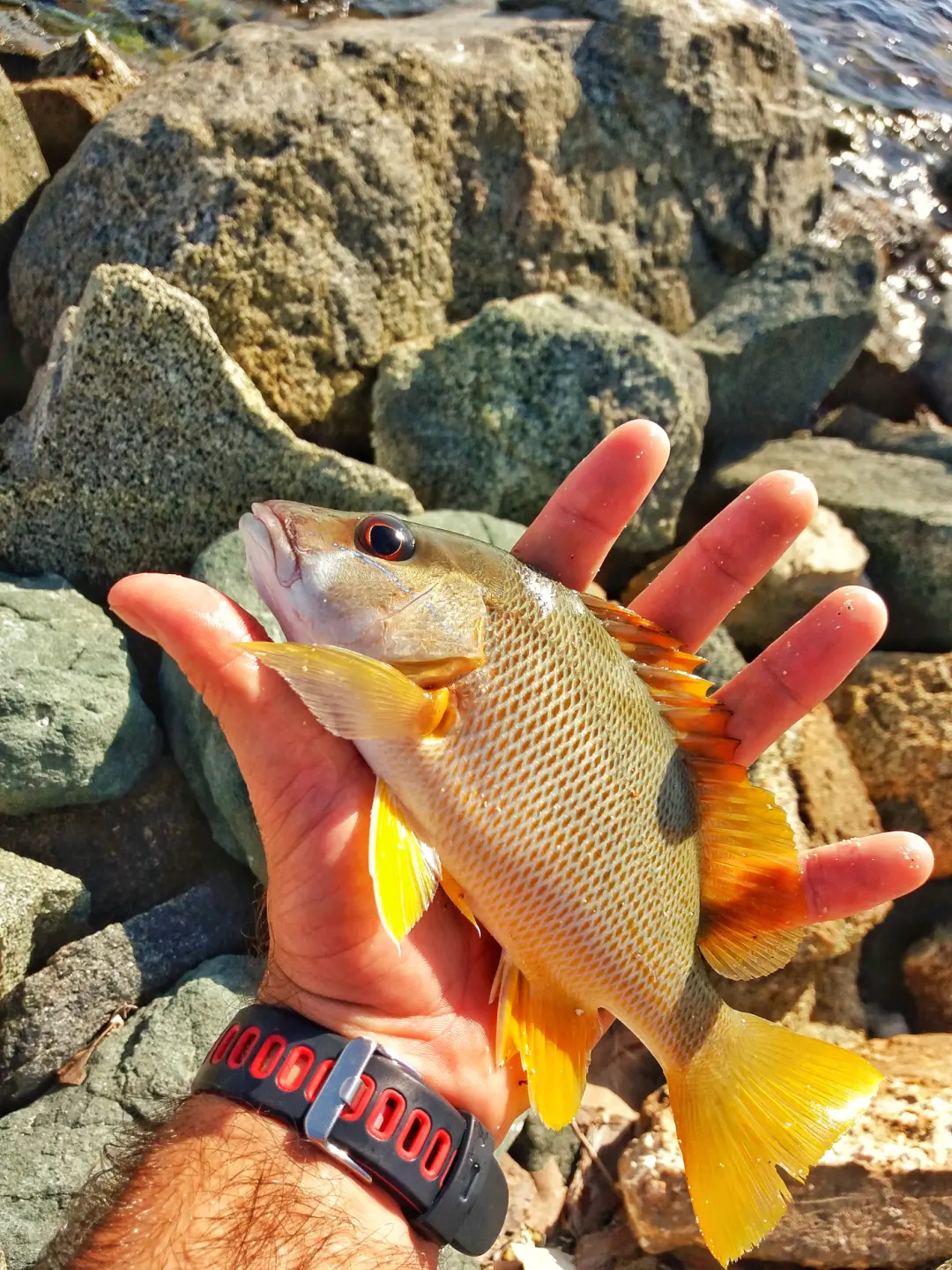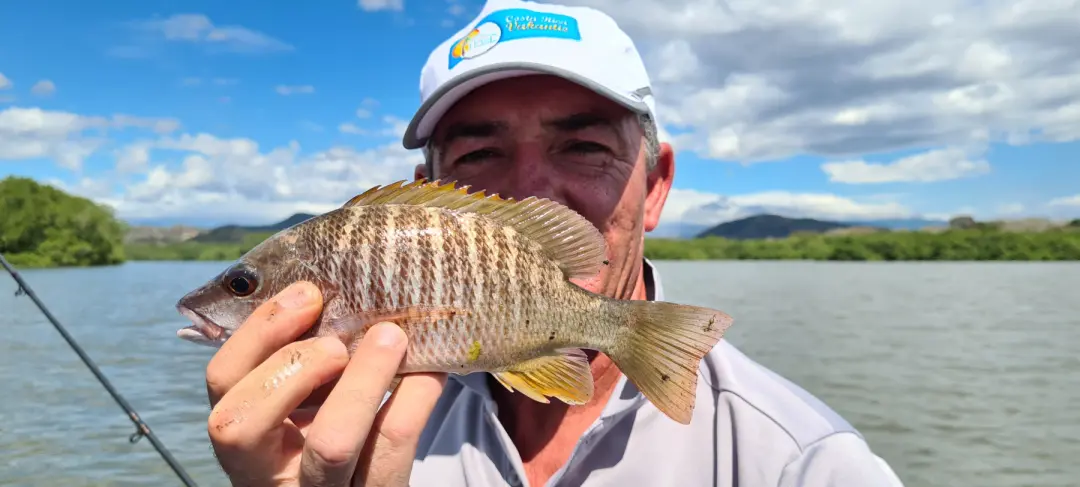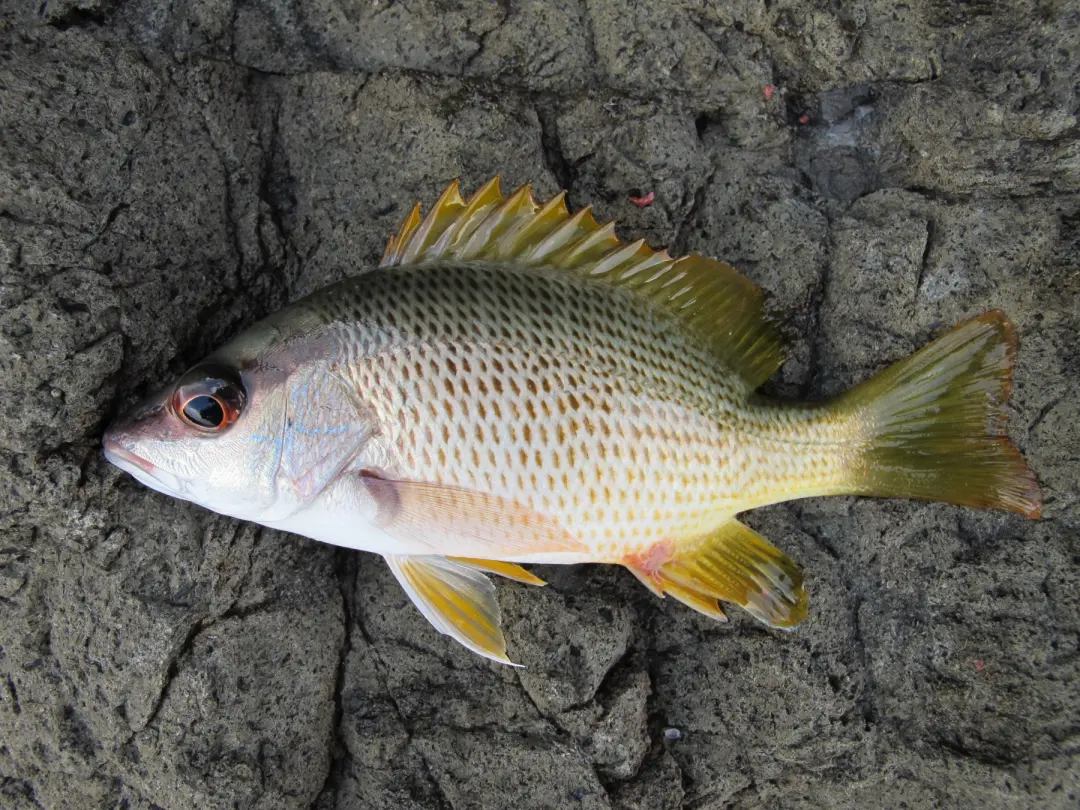

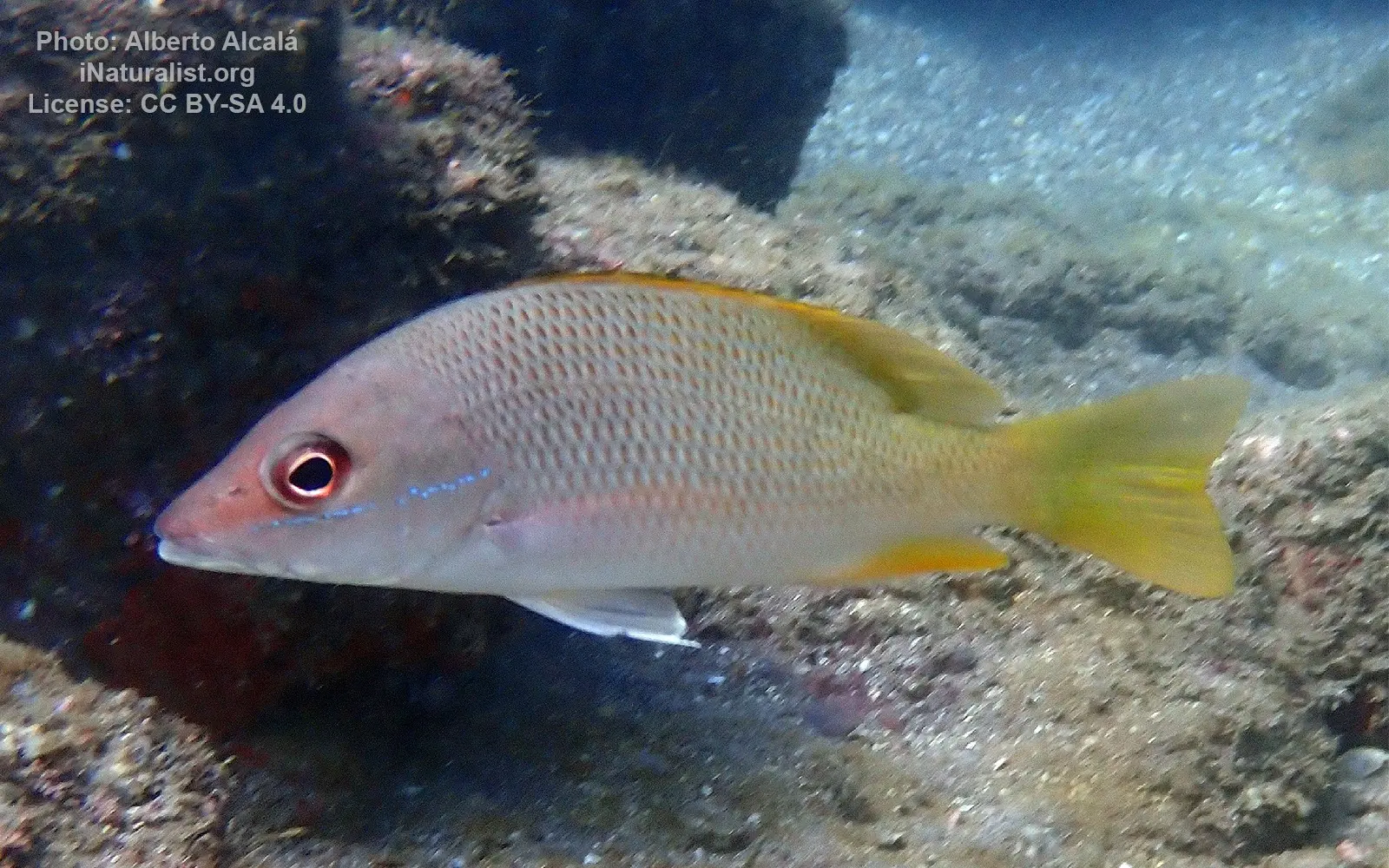
Yellow snapper (Lutjanus argentiventris)
General data
- Main name: Yellow snapper
- Local names: Amarillo snapper
- Climates: Tropical, Subtropical
- Habitat: Saltwater
- Native: North America, South America
- Distribution: Gulf of Panama, Caribbean Sea, Gulf of Nicoya, Atlantic Ocean, Pacific Ocean
Classification
- Genus: Lutjanus - Snappers
- Family: Lutjanidae - Snappers
- Order: Perciformes - Perches
- Class: Actinopteri - Ray-finned fishes
- Superclass: Osteichthyes - Bony fishes
Description
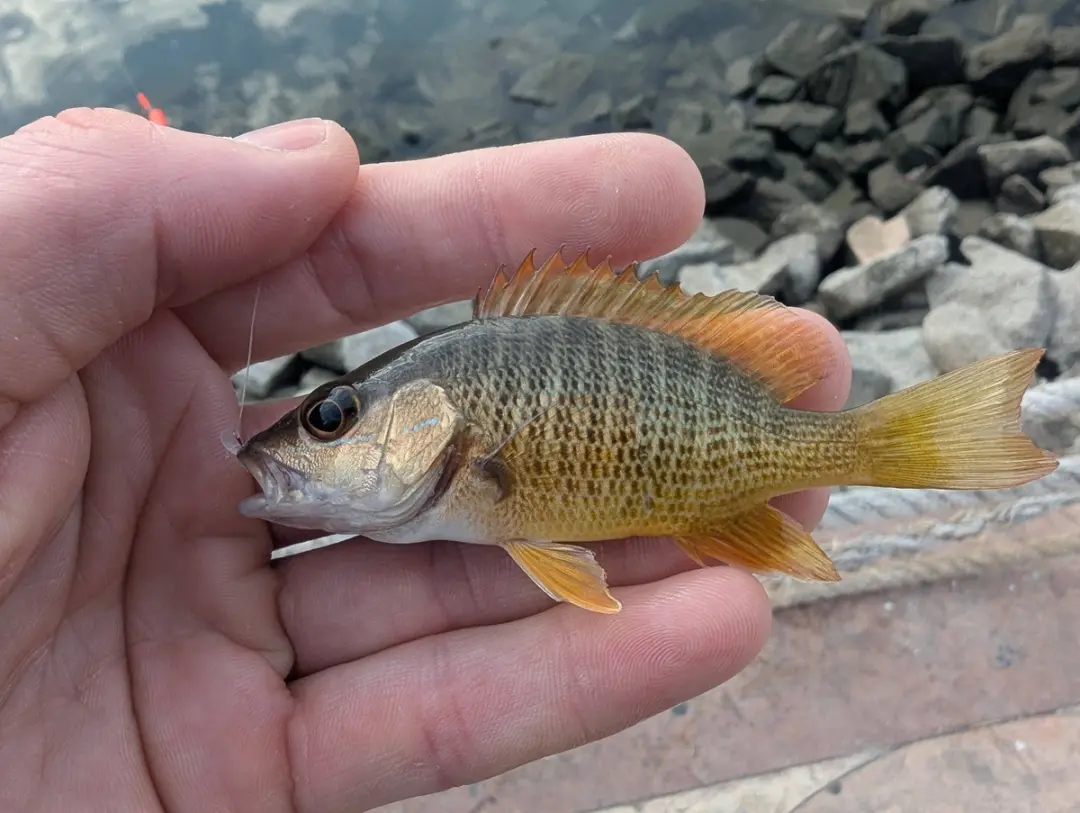
Lutjanus argentiventris, commonly known as the yellow snapper, is a reef-associated marine fish valued both by anglers and commercial fisheries. It has a streamlined, robust body typical of snappers, with a yellowish to silvery coloration and a slightly darker back, allowing it to blend well with reef and rocky habitats. This species is an active predator, feeding mainly on smaller fish, crustaceans, and other benthic organisms.
In terms of size, Lutjanus argentiventris is considered a medium-sized snapper. Most individuals are commonly encountered at lengths of 30–50 cm, while larger specimens can reach up to about 70–80 cm in total length. Its solid build and strength make it a popular and challenging catch for sport fishers, especially when taken on light tackle near reefs.
The distribution of the yellow snapper is primarily in the eastern Pacific Ocean. It ranges from the Gulf of California and the Pacific coast of Mexico southward through Central America to Peru, including offshore islands such as the Galápagos. It inhabits coastal reefs, rocky bottoms, and sometimes sandy areas near structures, usually from shallow waters down to moderate depths, making it accessible to both inshore and offshore fisheries.