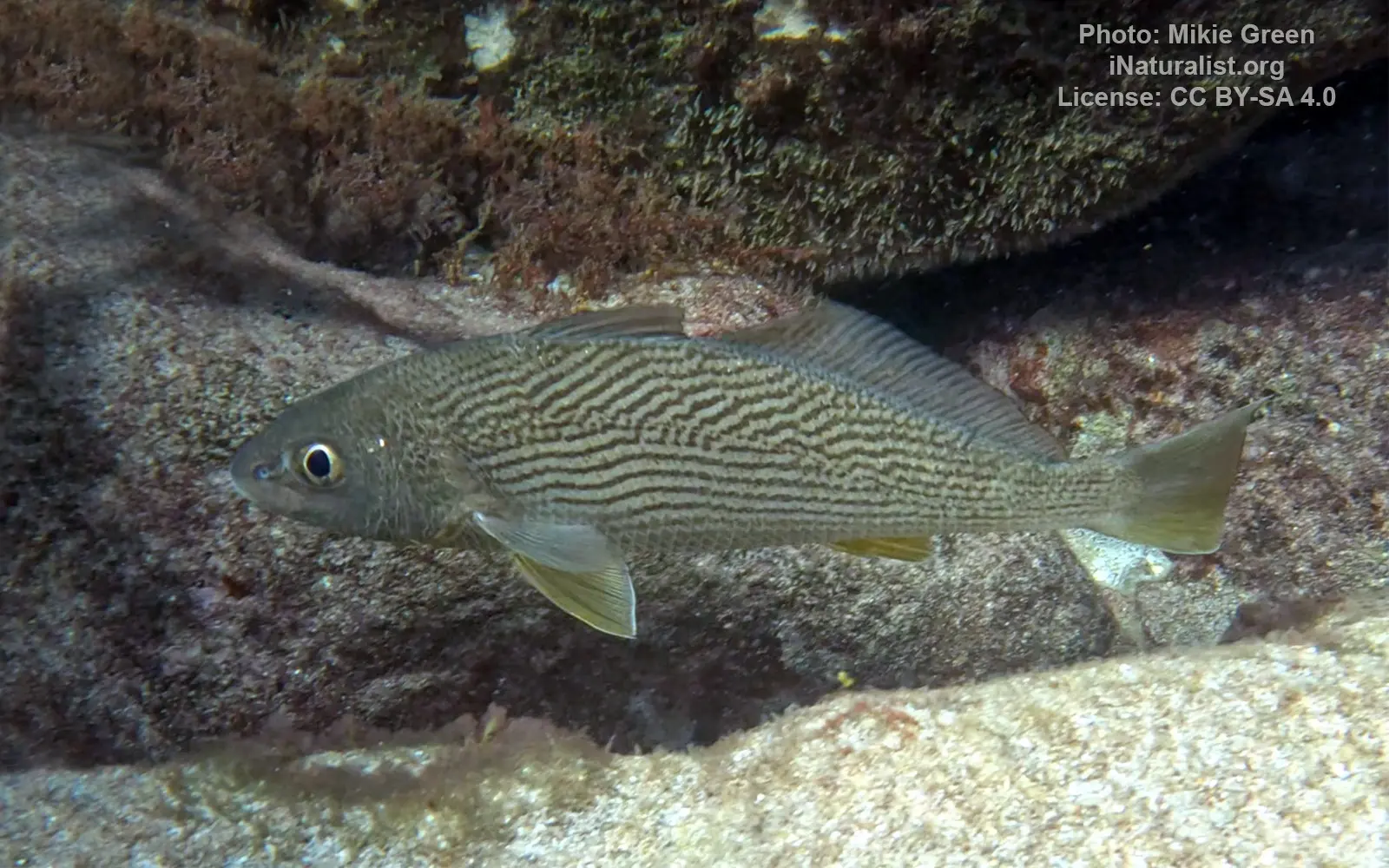


Sand drum (Umbrina coroides)
Image source: Mikie Green | inaturalist.org
General data
- Main name: Sand drum
- Climates: Tropical, Subtropical
- Habitat: Saltwater
- Native: North America, South America
- Distribution: Caribbean Sea, Gulf of Mexico, Atlantic Ocean
Classification
- Genus: Umbrina - Umbrina
- Family: Sciaenidae - Drums
- Order: Acanthuriformes - Surgeonfishes
- Class: Actinopteri - Ray-finned fishes
- Superclass: Osteichthyes - Bony fishes
Description
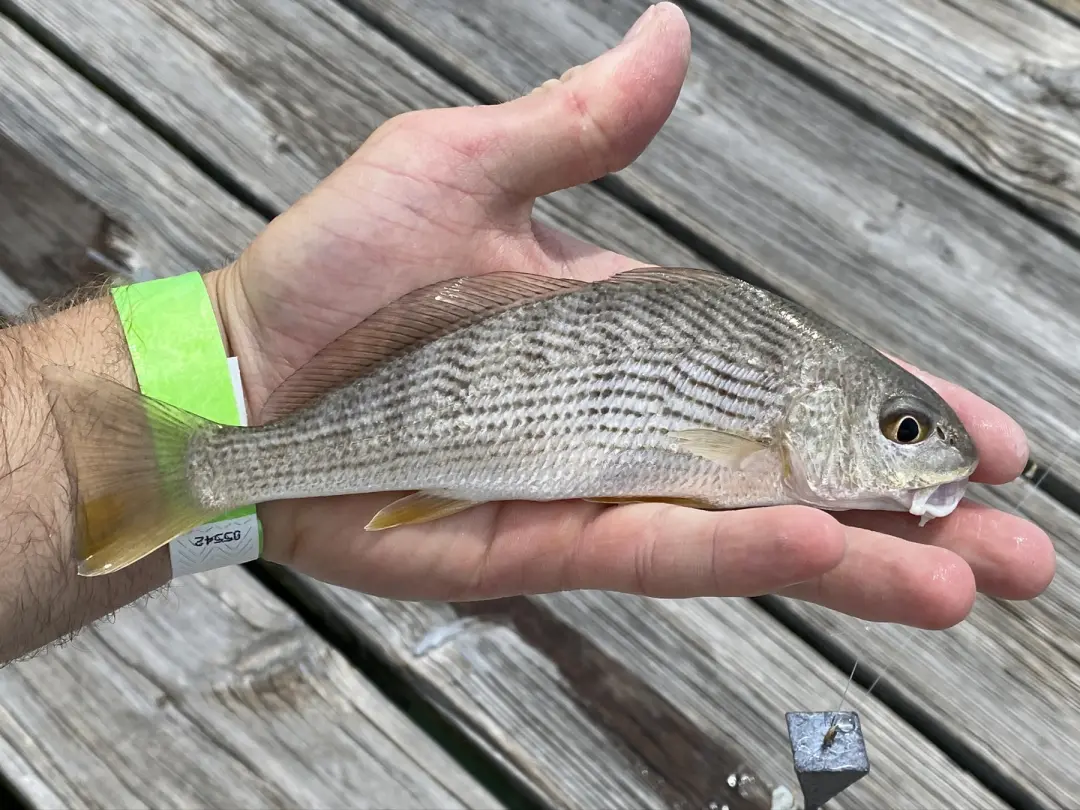
Umbrina coroides is a small marine croaker in the family Sciaenidae, known for the croaking sounds it produces using muscles on its swim bladder.
Description
This fish has an elongated, moderately compressed body with a high arched back and a low, broad head. Its basic color is silvery-gray above, fading to a lighter belly. A characteristic short, thick barbel on the chin helps it detect prey on soft bottoms.
Umbrina coroides shows many thin, dotted horizontal lines along its scale rows on the sides, which may be crossed by about 8–10 faint vertical bars on younger fish, though these vertical bars often fade as the fish grows larger.
Size
Adults typically reach around 25–35 cm in length, with some individuals near 35–40 cm.
Distribution
This species occurs in the western Atlantic, from the southeastern United States (e.g., Chesapeake Bay, Florida) through the Caribbean to northern South America and Brazil. It inhabits shallow coastal waters over sandy or muddy bottoms and estuaries.