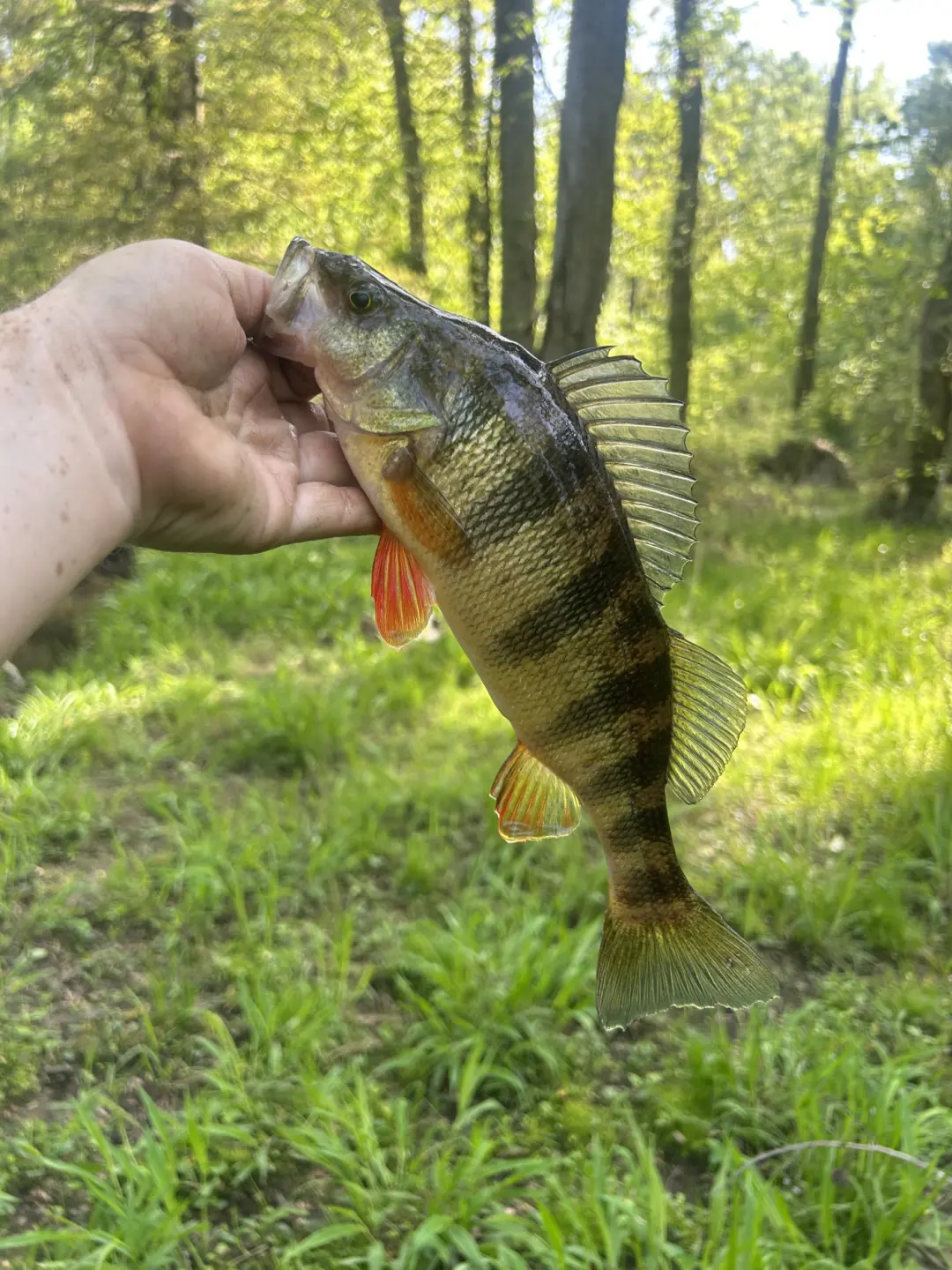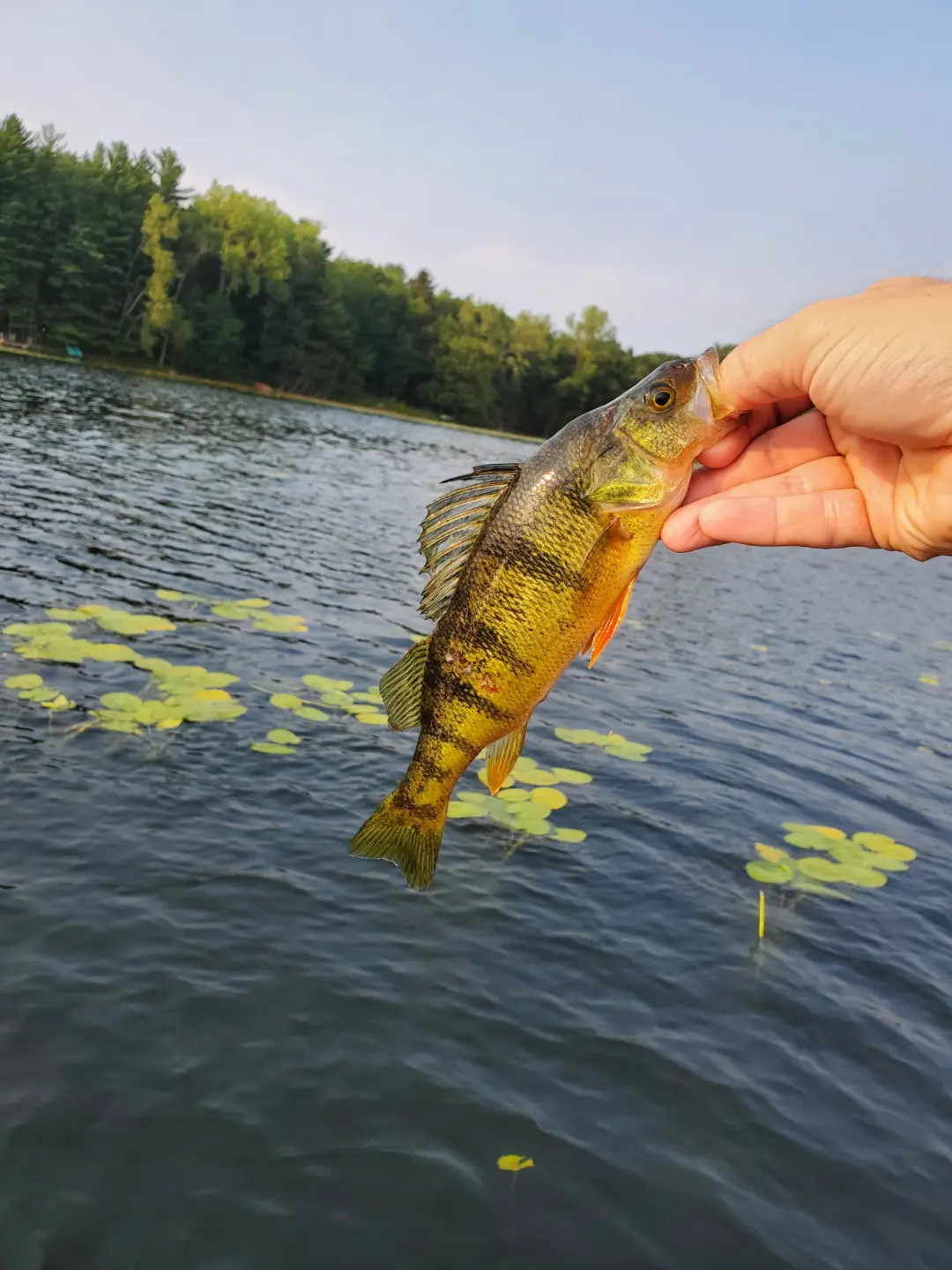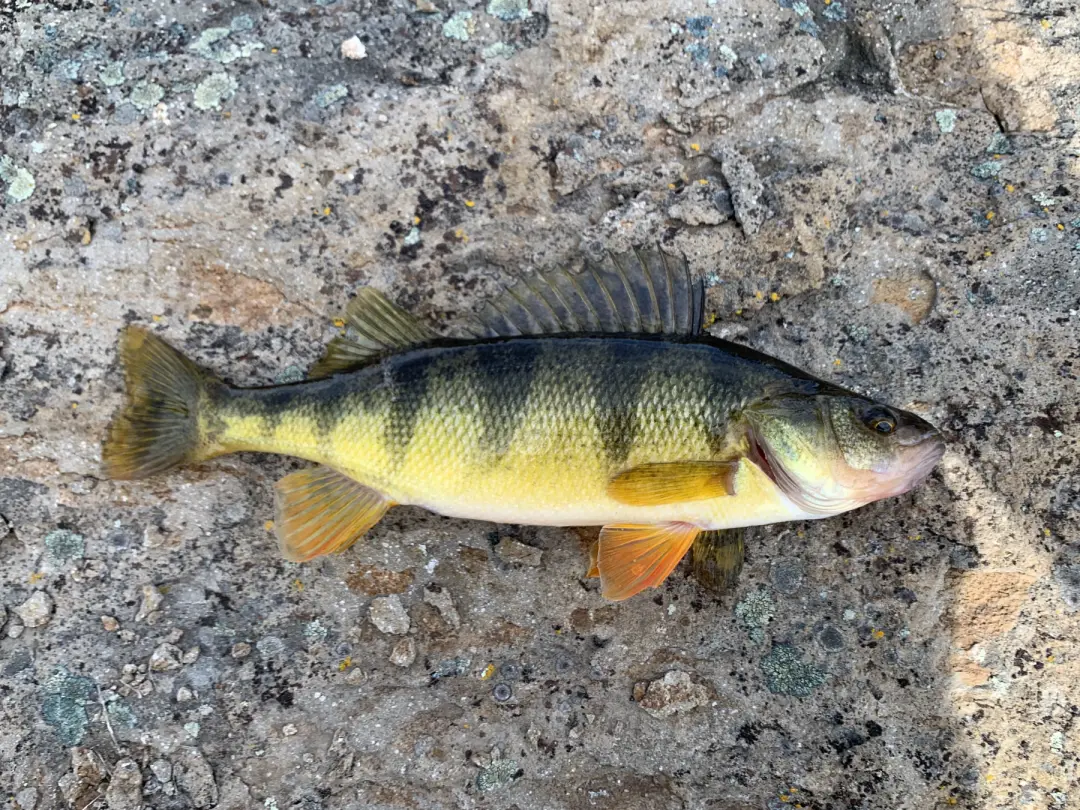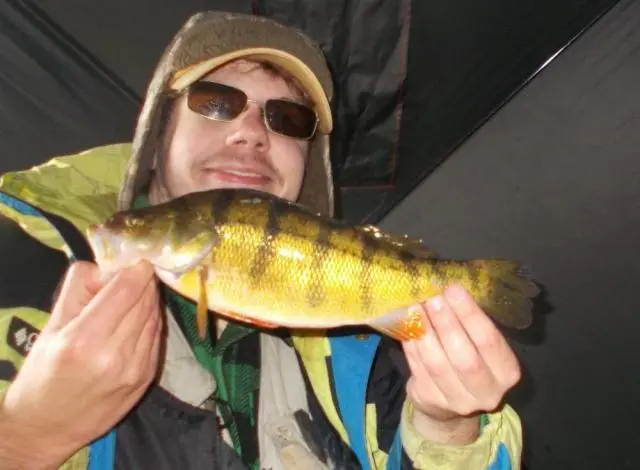
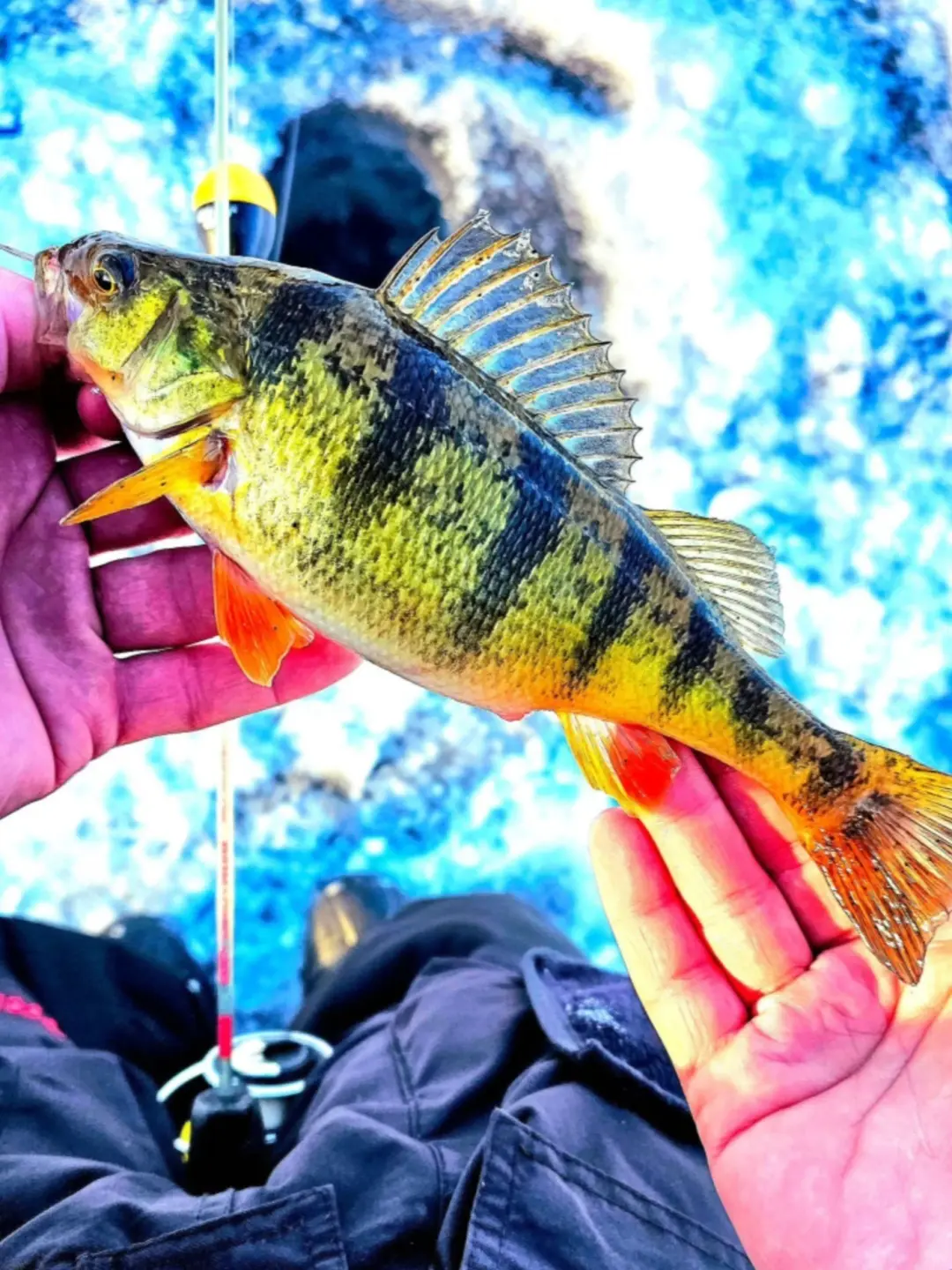
Yellow perch (Perca flavescens)
General data
- Main name: Yellow perch
- Local names: American yellow perch
- Climates: Temperate, Continental
- Habitat: Freshwater
- Native: North America
- Distribution: Klamath River, Delaware River, Connecticut River, Savannah river, Santee River, Lake Washington, View all... Sevier River, Rappahannock River, Neuse River, St. Lawrence River, Columbia River, Mississippi River, Apalachicola River, Mackenzie
Classification
- Genus: Perca - Perches
- Family: Percidae - Perches
- Order: Perciformes - Perches
- Class: Actinopteri - Ray-finned fishes
- Superclass: Osteichthyes - Bony fishes
Description
Description
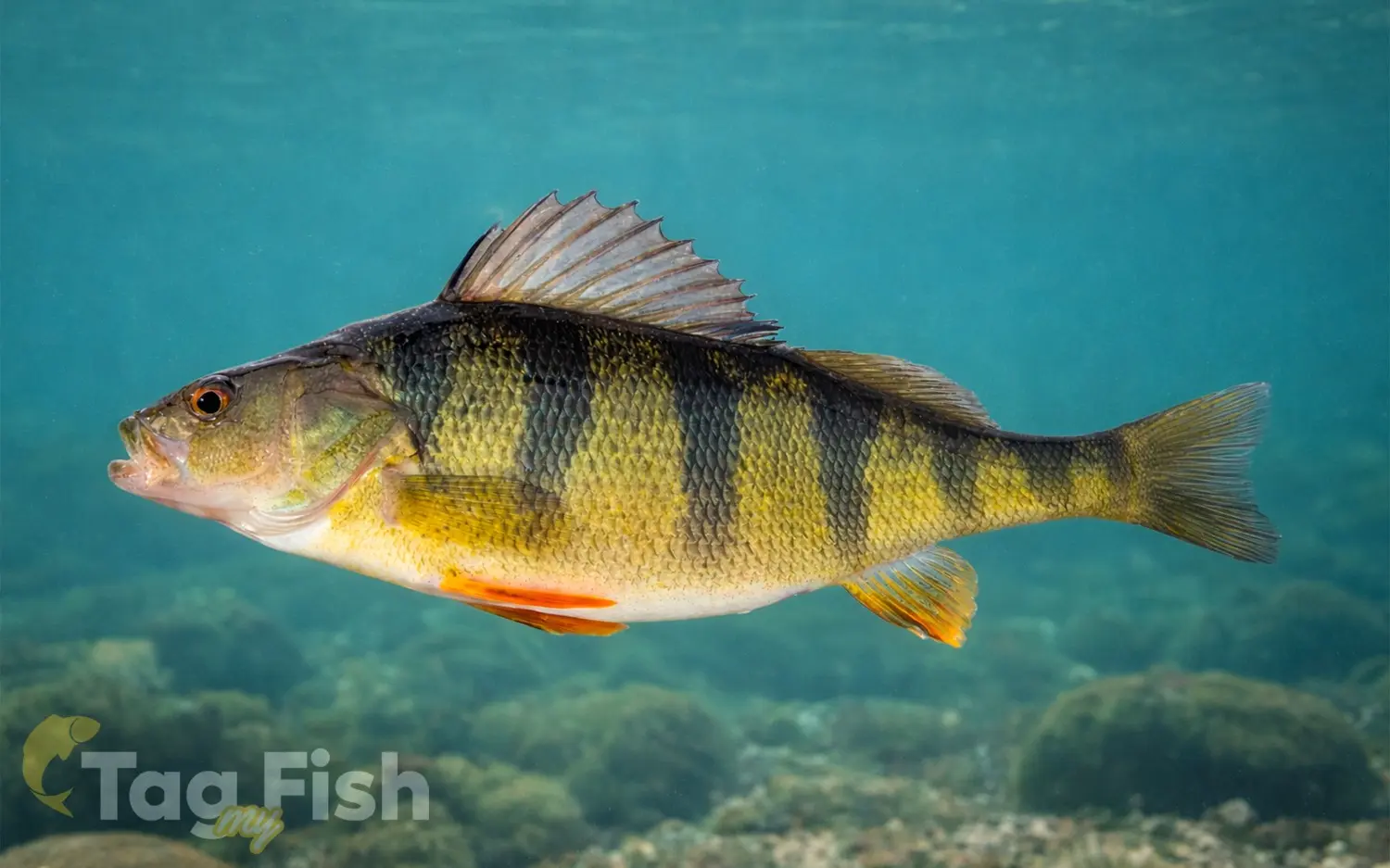
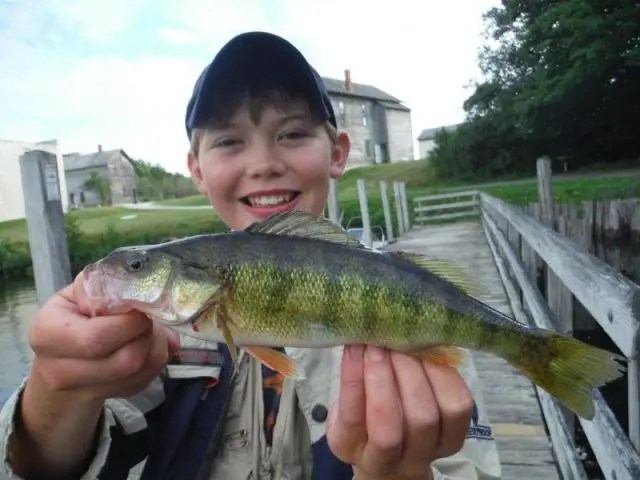
Yellow perch have an elongate, laterally compressed body with a subterminal mouth and a blunt snout. The body is covered in rough ctenoid scales, and the species possesses approximately 800 fine teeth. Like other perches, they have two separate dorsal fins: the first with 12–14 spines and the second with 2–3 spines followed by 12–13 soft rays. The anal fin contains two spines and 7–8 soft rays, and the forked caudal fin is homocercal.
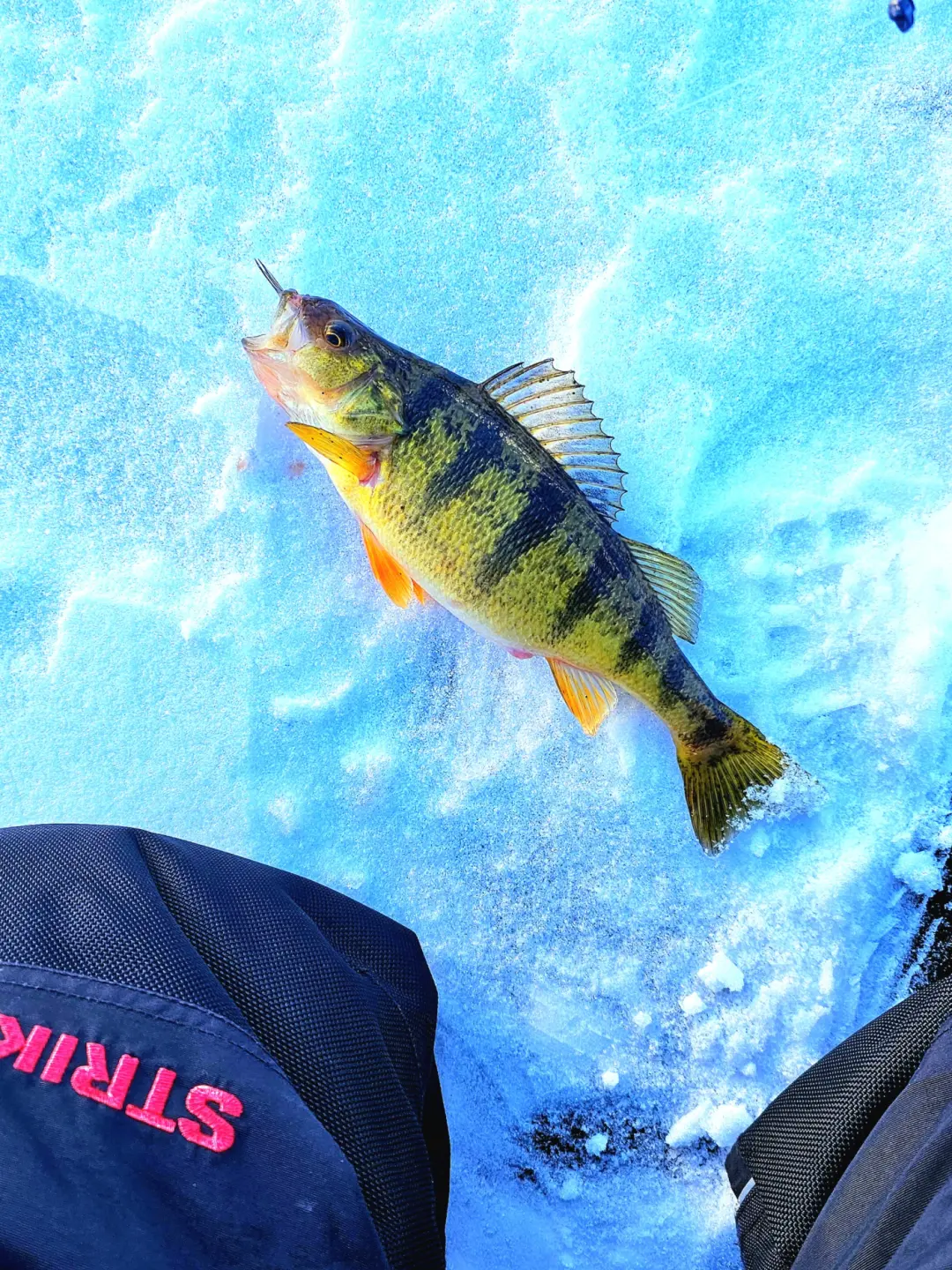
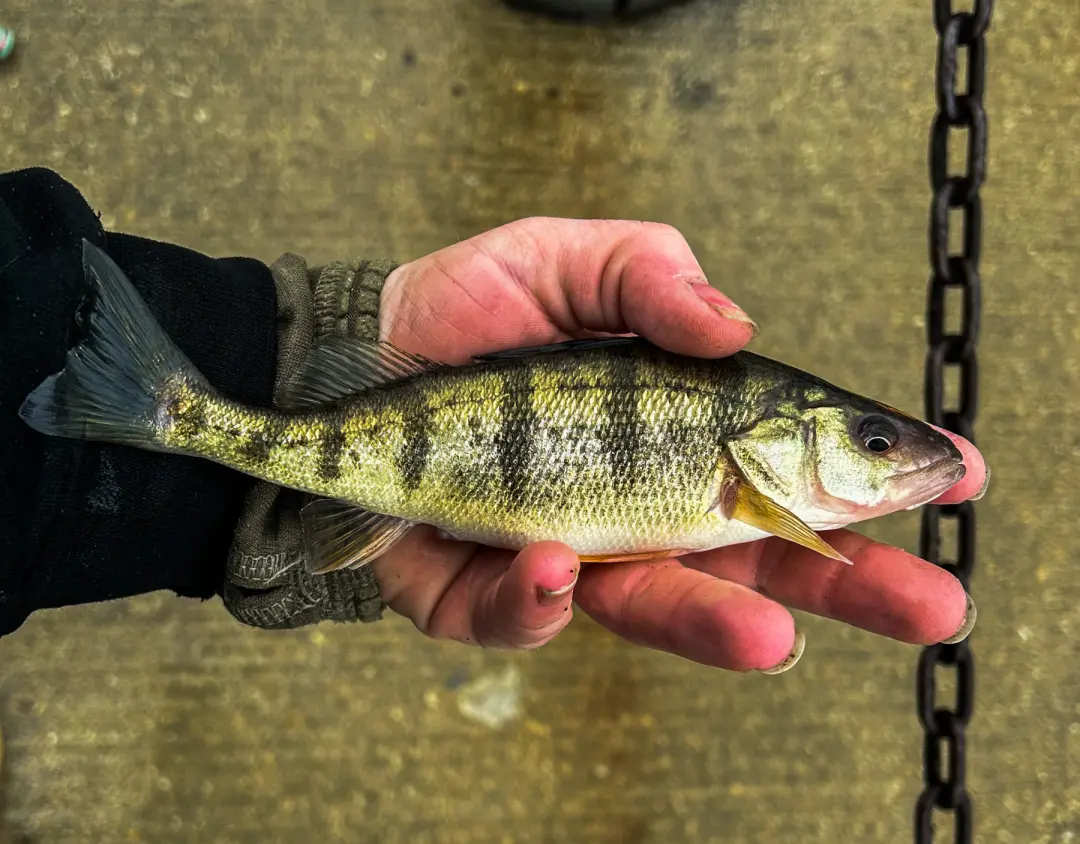
Coloration varies from bright green to olive or golden brown on the upper body, with 6–8 dark vertical bars along yellowish flanks. A dark blotch is usually visible on the first dorsal fin. The dorsal and tail fins range from yellow to green, while the anal and pelvic fins are yellow to silvery white.
During spawning, males develop more intense yellow or red coloration on the lower fins. Juveniles are paler and may appear almost whitish.
Yellow perch commonly reach about 19 cm in length, but can grow up to 50 cm. The maximum recorded weight is 1.9 kg.
HabitatYellow perch primarily inhabit the littoral zones of both large and small lakes, but they are also found in slow-moving rivers, streams, ponds, and even brackish waters. Due to stocking and habitat modification, they are now widespread in reservoirs and other man-made waters. They thrive in both cool and moderately warm lakes and can become extremely abundant in smaller, productive systems unless controlled by predation.
Distribution
Yellow perch are native to North America, occurring naturally in tributaries of the Atlantic Ocean and Hudson Bay. Their core native range includes the Great Lakes–St. Lawrence River basin and the Mississippi River basin.
In Canada, yellow perch are native throughout all the Great Lakes and range from Nova Scotia west to the Prairie provinces, extending north to the Mackenzie River system. They are also common in Great Slave Lake.
In the United States, the native range extends south into Ohio and Illinois and across most of the northeastern states. Their distribution was influenced by post-glacial meltwater connections from the Mississippi River system.
Yellow perch are also native to the Atlantic Slope basin, reaching as far south as the Savannah River, with a small likely native population in the Dead Lakes region of Florida.
The species has been widely introduced for sport and commercial fishing, as well as to provide forage for bass and walleye. Many introductions were carried out by the U.S. Fish Commission in the late 19th and early 20th centuries, while others likely resulted from illegal stocking, connected waterways, and use as live bait.
Today, yellow perch occur from northern Missouri east to Pennsylvania, south to South Carolina, and north to Maine, with additional introduced populations in the western United States. The species has been extirpated in Arkansas.
Outside North America, yellow perch have been introduced to China and Japan.