

logo
Anglerpedia main menu
Anglerpedia
Fishes Waters Continents Countries Fishing Techniques Tackle and Baits Brands Shops and Companies Ecological Problems Fishing Rigs Tagged Fish Species

Preferred language:

US English ES Spanish DE German FR French SR Serbian RU Russian
Log in
  • About
  • Help
  • Contact
  • Privacy Policy
  • Terms & Conditions
  • Community Standards
  • Copyright © Tag my Fish 2026 | All Rights Reserved

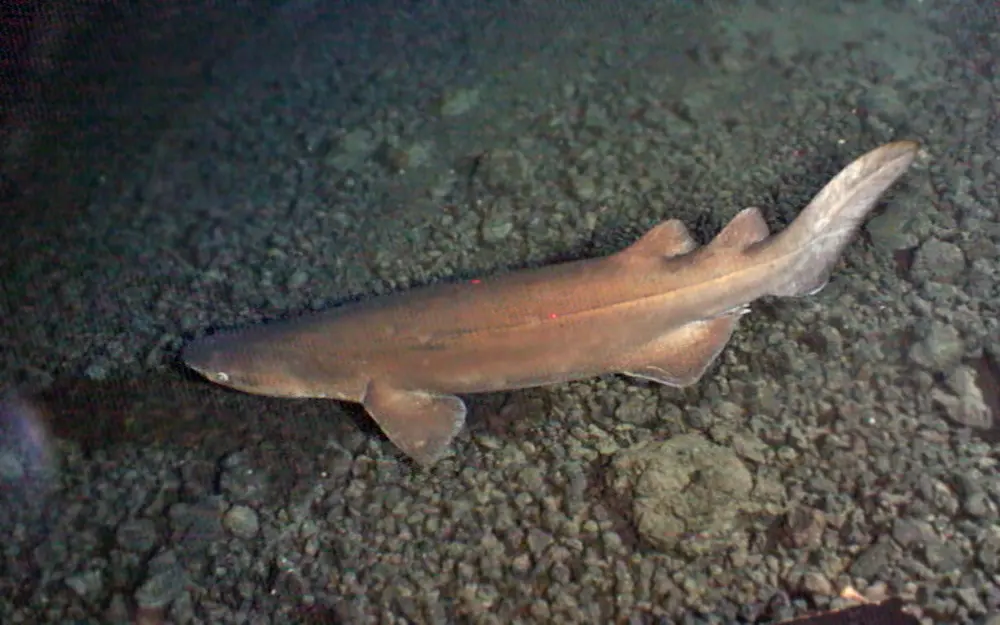
Prickly shark  (Echinorhinus cookei)

General data

  • Main name: Prickly shark
  • Climates: Tropical, Subtropical, Temperate
  • Habitat: Saltwater
  • Native: Asia, North America, South America, Australia & Oceania
  • Distribution: East China Sea, South China Sea, Sea of Japan (East Sea), Gulf of Carpentaria, Pacific Ocean, Gulf of California (Sea of Cortez), View all... Arafura sea

Classification

  • Genus: Echinorhinus - Bramble sharks
  • Family: Echinorhinidae - Bramble sharks
  • Order: Echinorhiniformes - Bramble sharks
  • Class: Elasmobranchii - Sharks and Rays
  • Superclass: Chondrichthyes - Cartilaginous fishes

Catches (0) Description

The prickly shark (Echinorhinus cookei) is one of the two species of sharks in the family Echinorhinidae (the other one is the bramble shark), found in the Pacific Ocean over continental and insular shelves and slopes, and in submarine canyons. Bottom-dwelling in nature, it generally inhabits cool waters 100–650 m (330–2,130 ft) deep, but it also frequently enters shallower water in areas such as Monterey Bay off California. This stocky, dark-colored shark grows up to 4.0 m (13.1 ft) long, with two small dorsal fins positioned far back on its body and no anal fin. It is characterized by a dense covering of thorn-like dermal denticles, hence its common name. Nocturnally active, the prickly shark rests during the day in deeper offshore waters and performs a diel migration to shallower inshore waters at dusk. Individual sharks have a small home range and tend to remain within a given local area. This species consumes a variety of bony and cartilaginous fishes, and cephalopods. Since it moves slowly, it may use suction to capture prey. It is aplacental viviparous, with females producing sizable litters. The prickly shark is not known to be dangerous to humans and has minimal economic value. It is caught incidentally by commercial deepwater fisheries, which are expanding and may potentially threaten its population. Thus, the International Union for Conservation of Nature (IUCN) has assessed this species as Data Deficient.

Taxonomy of Fishes

  • Osteichthyes - Bony fishes->
  • Chondrichthyes - Cartilaginous fishes->
    • Elasmobranchii - Sharks and Rays->
      • Lamniformes - Mackerel sharks->
      • Carcharhiniformes - Ground sharks->
      • Rhinopristiformes - Shovelnose rays->
      • Torpediniformes - Electric rays->
      • Rajiformes - Skates and rays->
      • Orectolobiformes - Carpet shark->
      • Squatiniformes - Angelsharks->
      • Heterodontiformes - Bullhead and horn sharks->
      • Hexanchiformes - Six-gill sharks->
      • Myliobatiformes - Stingrays->
      • Squaliformes - Sleeper and dogfish sharks->
      • Echinorhiniformes - Bramble sharks->
        • Echinorhinidae - Bramble sharks->
          • Echinorhinus - Bramble sharks->
            • Prickly shark (Echinorhinus cookei)
            • Bramble shark (Echinorhinus brucus)
      • Pristiophoriformes - Saw sharks->
    • Holocephali - Chimaeras->
  • Agnatha - Jawless fishes->
logo

Tag Your Catch and
Win a Twin Power!

Post your catch and get a chance to win the Shimano Twin Power XD 4000 PG!

The more catches you post, the higher your chances of winning this amazing prize. Every catch shared between May and November 2025 is automatically entered into the prize draw.
Only one rule: Make sure to tag both the fish species and the body of water!

Log in

Sponsored by:

 Capriolo
Twin Power 4000 XD PG

Catch more fish.
Discover where and how →