


Southern stargazer (Astroscopus y-graecum)
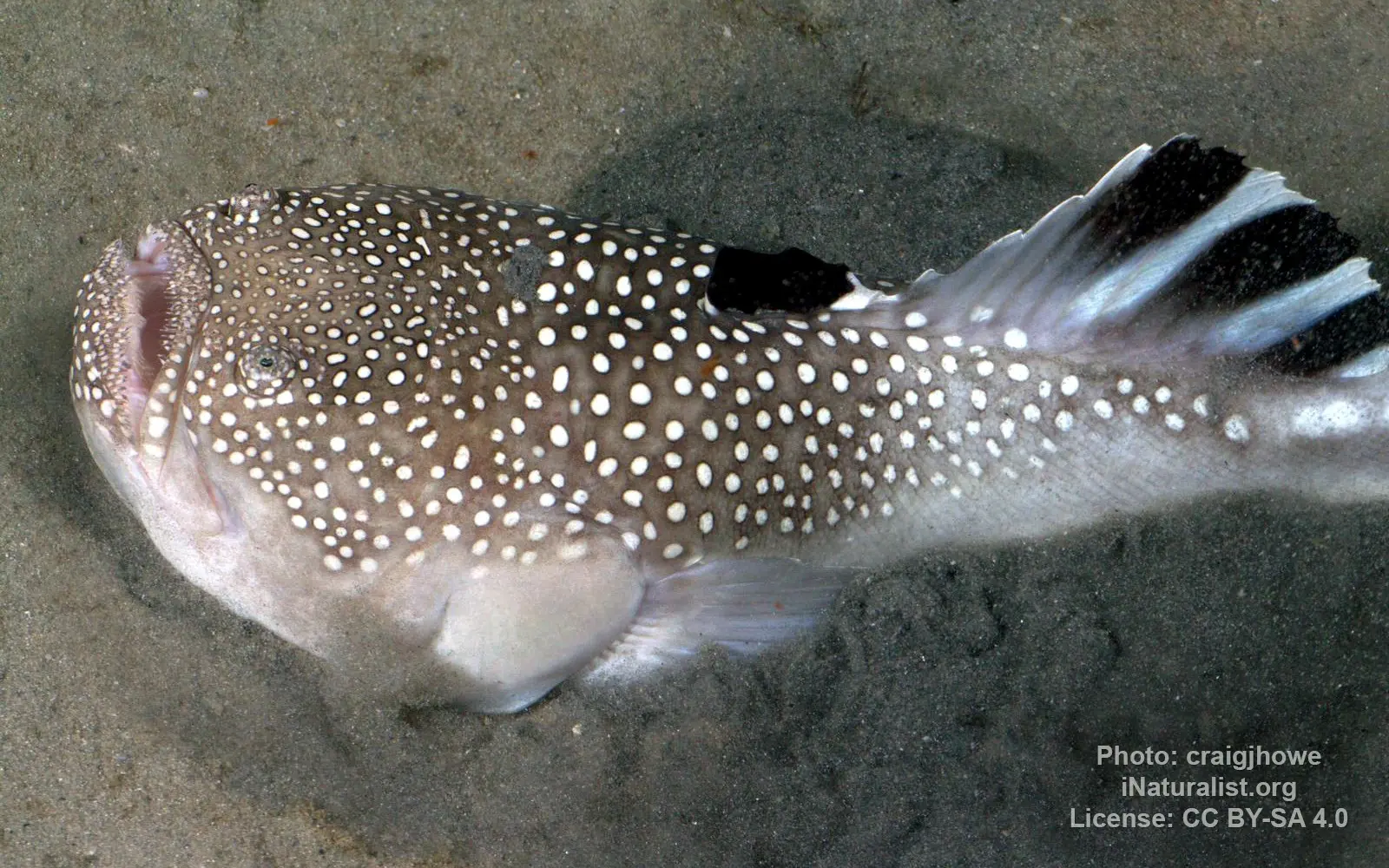
Image source: craigjhowe | inaturalist.org
General data
- Main name: Southern stargazer
- Climates: Tropical, Subtropical
- Habitat: Saltwater
- Native: North America, South America
- Distribution: Atlantic Ocean, Gulf of Mexico, Caribbean Sea
Classification
- Genus: Astroscopus - Astroscopus
- Family: Uranoscopidae - Stargazers
- Order: Trachiniformes - Weeverfishes
- Class: Actinopteri - Ray-finned fishes
- Superclass: Osteichthyes - Bony fishes

Astroscopus y-graecum, commonly known as the southern stargazer, is a marine fish native to the western Atlantic Ocean. It has a brown body covered with small white spots, black-and-white edged pectoral fins, and a tail marked with three dark bands.
This ambush predator spends much of its time buried in sand or soft sediment, leaving only its eyes, nostrils, and mouth exposed while waiting for prey.
The species is distributed from North Carolina along the southeastern coast of the United States, throughout the Gulf of Mexico to the Yucatán Peninsula, and along the Caribbean and Atlantic coasts of Central and South America as far as Rio de Janeiro, Brazil. It inhabits shallow coastal waters and reefs with sandy, silty, or soft rubble bottoms at depths of up to about 70 m.
One of the southern stargazer's most remarkable features is its electric organ, located behind the eyes and derived from modified eye muscles. It can produce electrical discharges of up to about 50 volts, primarily for defense rather than hunting. This rare adaptation makes it one of the few bony fishes capable of generating electricity.