
Atlantic silverside (Menidia menidia)
Image source: Luke Ovgard
General data
- Main name: Atlantic silverside
- Local names: Spearing
- Climates: Subtropical, Temperate
- Habitat: Saltwater
- Native: North America
- Distribution: Atlantic Ocean
Classification
- Genus: Menidia - Menidia
- Family: Atherinopsidae - Neotropical silversides
- Order: Atheriniformes - Silversides
- Class: Actinopteri - Ray-finned fishes
- Superclass: Osteichthyes - Bony fishes
Description
The Atlantic silverside (Menidia menidia), also known as spearing in the northeastern United States, is a small species of fish that is one of the most abundant fish species present in estuarine habitats along the Atlantic coast of North America.
It is a common subject of scientific research because of its sensitivity to environmental changes. According to the IUCN Red List, this species is stable and has no major threats to its populations, so it is marked Least Concern.
Despite being an extremely common species, most individuals die after one year once they migrate offshore, but a few will make it to two years.
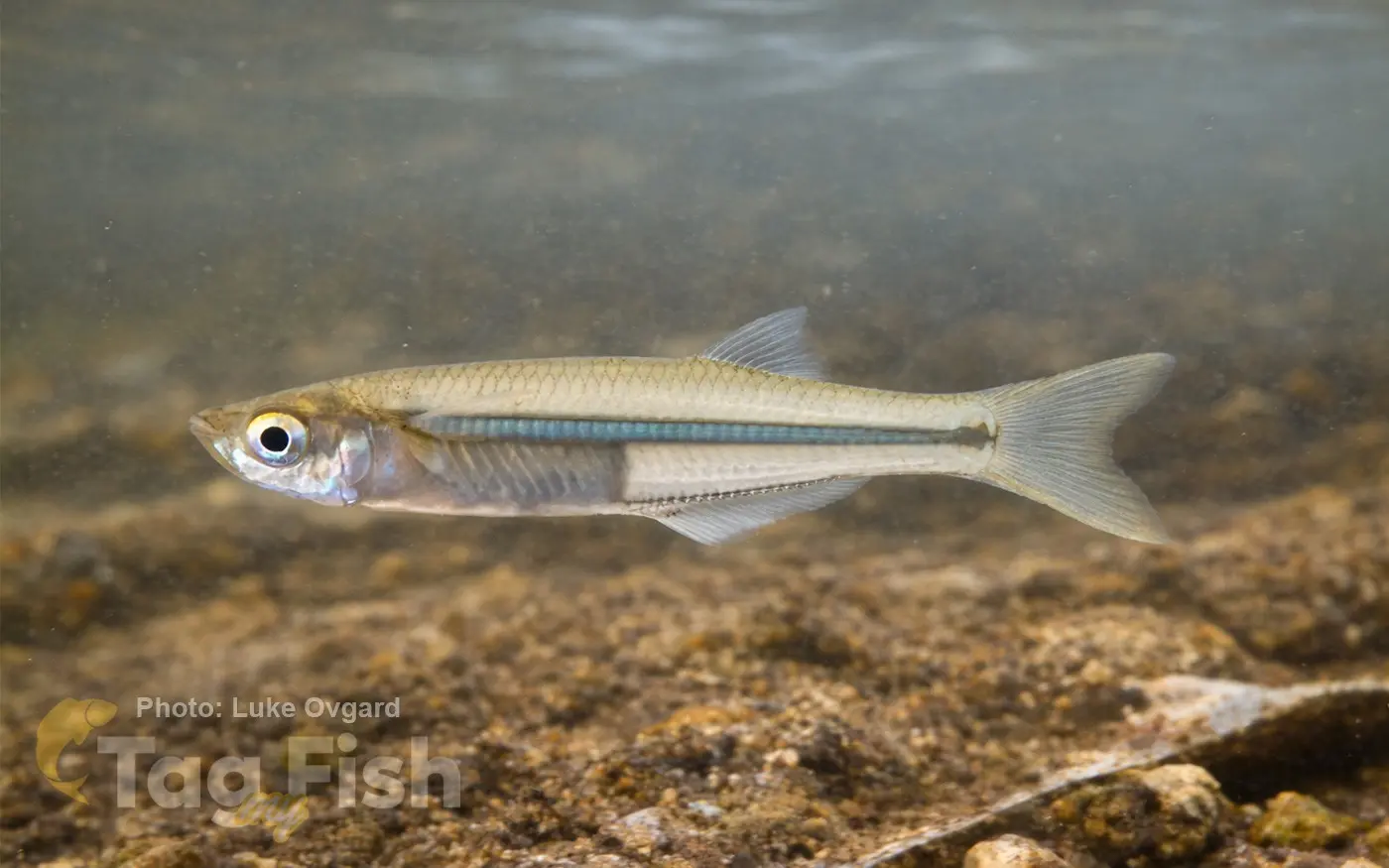
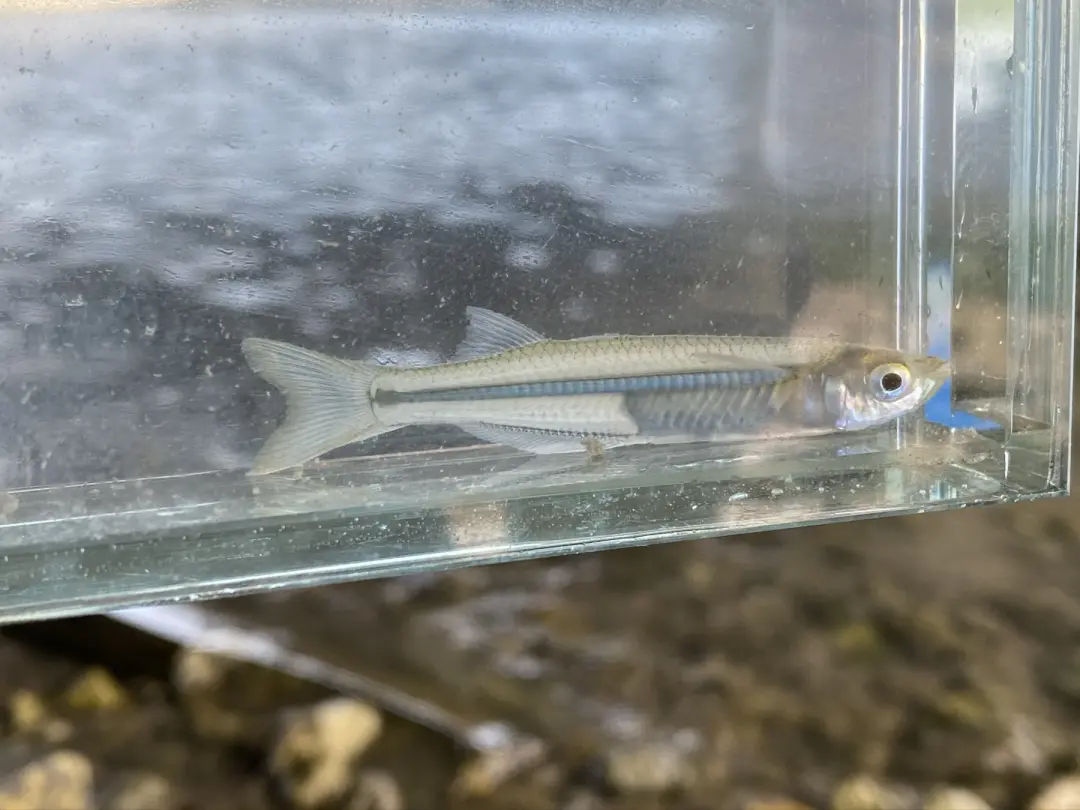
The fish is mostly translucent, with white coloring on the anterior end of the body and brown speckling on the top of the head, the posterior scales on the back, and near the jaw. A distinctive silver band runs the length of the fish, next to the lateral line. Their mouths are large compared to other Menidia species, and their first dorsal fins are placed more posteriorly than other silversides.
The Atlantic silverside is found in the West Atlantic, ranging from the Gulf of St. Lawrence in Canada to northeastern Florida in the USA. It is one of the most common fish in the Chesapeake Bay and in the Barnegat Bay. Recent studies have found that their range may reach farther north than previously thought, as juvenile members of this species were found north of the Laurentian Channel in beach seines.