

Mosshead sculpin (Clinocottus globiceps)
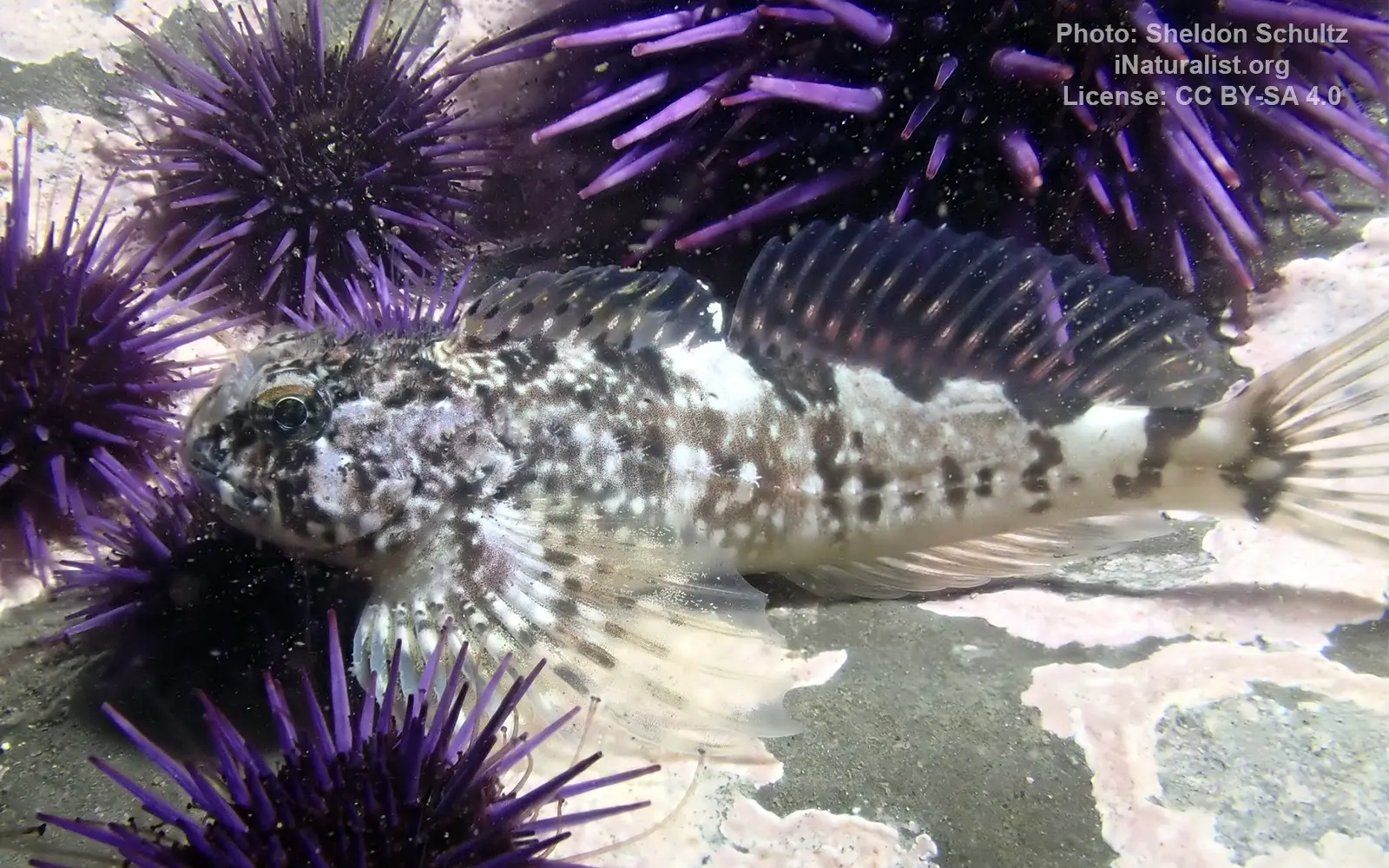
Image source: Sheldon Schultz | inaturalist.org
General data
- Main name: Mosshead sculpin
- Local names: Globe-headed sculpin
- Climates: Temperate
- Habitat: Saltwater
- Native: North America
- Distribution: Pacific Ocean
Classification
- Genus: Clinocottus - Clinocottus
- Family: Cottidae - Cottids
- Order: Scorpaeniformes - Mail-cheeked fishes
- Class: Actinopteri - Ray-finned fishes
- Superclass: Osteichthyes - Bony fishes

Mosshead sculpin (Clinocottus globiceps), also known as the globe-headed sculpin, is a species of marine ray-finned fish belonging to the family Cottidae, the typical sculpins. This species inhabits the northeastern Pacific Ocean and is commonly found along the western coast of North America, from Kodiak Island in Alaska to Gaviota in California. It is a characteristic fish of rocky coastal environments and tide pools.
Clinocottus globiceps has a robust body and a relatively large head covered with numerous small fleshy projections known as cirri, especially between the eyes and along the lateral line. These structures help the fish blend into algae-covered rocks. The dorsal fins are supported by 9–10 spines and 15–17 soft rays, while the anal fin contains 10–12 soft rays. The caudal fin is rounded, and the pectoral fins are distinctive because the lower rays are thickened and partially separated, helping the fish maintain position on rocky surfaces in strong waves. This species can reach a maximum length of about 19 cm.
This sculpin lives mainly in the intertidal zone, occupying tide pools and shallow rocky areas exposed to strong surf. Individuals are generally resident fish and show a strong homing behavior, often returning to the same shelter or tide pool after being displaced. They typically hide under rocks or within seaweed, where their mottled coloration and cirri provide excellent camouflage.
Like several other tide-pool sculpins, the mosshead sculpin can breathe air and temporarily survive outside water, allowing it to endure changing conditions in intertidal habitats. Its diet is varied and includes barnacles, copepods, nemerteans, annelid worms, ostracods, and algae. Interestingly, this species also preys on sea anemones such as Anthopleura elegantissima and Epiactis prolifera, a feeding habit that may explain some of its unique morphological and behavioral adaptations.
Because of its adaptability to fluctuating tidal environments and its specialized feeding habits, the mosshead sculpin is an important and fascinating component of the rocky shore ecosystems of the northeastern Pacific.