

logo
Anglerpedia main menu
Anglerpedia
Fishes Waters Continents Countries Fishing Techniques Tackle and Baits Brands Shops and Companies Ecological Problems Fishing Rigs

Preferred language:

US English ES Spanish DE German FR French SR Serbian RU Russian
Log in
  • About
  • Help
  • Contact
  • Privacy Policy
  • Terms & Conditions
  • Community Standards
  • Copyright © TagMyFish 2025 | All Rights Reserved

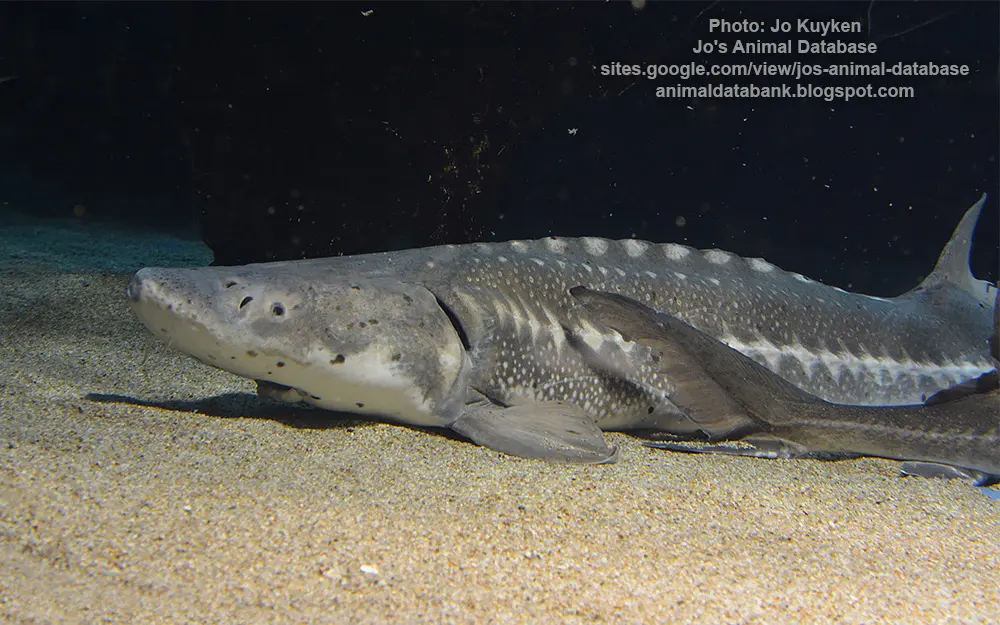
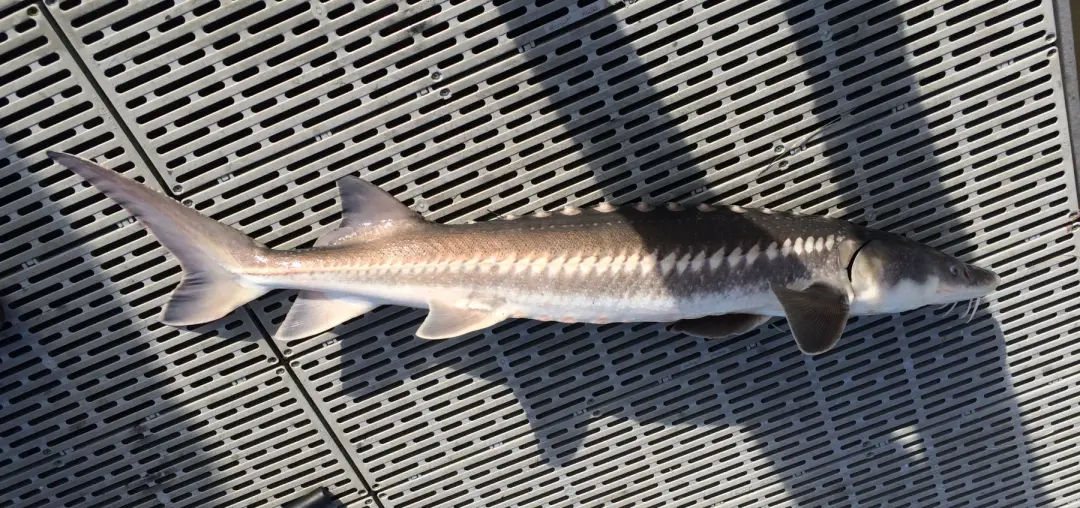
White sturgeon  (Acipenser transmontanus)
General data

  • Main name: White sturgeon
  • Habitat: Anadromous
  • Native: Europe, North America
  • Distribution: Sacramento River, San Joaquin River, Fraser River, Colorado River (Gulf of California), Columbia River, Pacific Ocean

Classification

  • Genus: Acipenser - Greater sturgeons
  • Family: Acipenseridae - Sturgeons
  • Order: Acipenseriformes - Sturgeons and Paddlefish
  • Class: Chondrostei - Sturgeons and Paddlefishes
  • Superclass: Osteichthyes - Bony fishes
About Catches (3)

Description

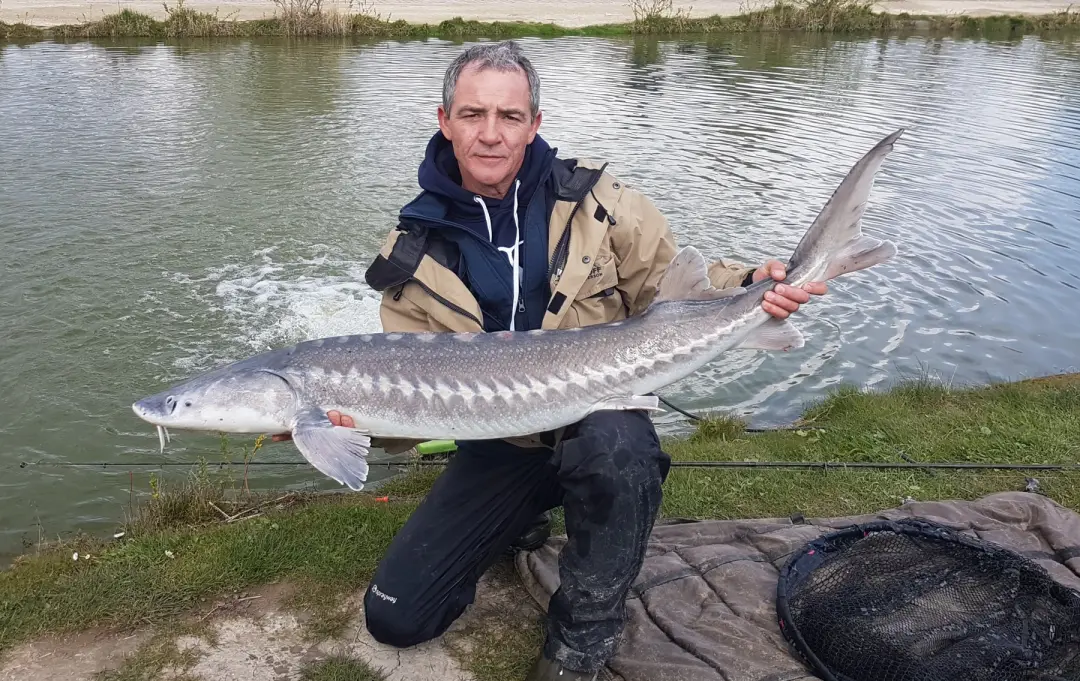
White sturgeon (Acipenser transmontanus) is a species of sturgeon in the family Acipenseridae of the order Acipenseriformes. They are an anadromous fish species ranging in the Eastern Pacific; from the Gulf of Alaska to Monterey, California. However, some are landlocked in the Columbia River Drainage, Montana, and Lake Shasta in California, with reported sightings in northern Baja California, Mexico. Description A. transmontanus is distinguished by the two rows of four to eight ganoid bony plates between the anus and anal fin, with about 45 rays present in the dorsal fin. Coloring can range from gray to brownish on the dorsal side, paler on the ventral side, and gray fins. Barbels are situated anterior to the mouth, closer to the snout than the mouth. At sexual maturity, A. transmontanus can reach 1.6 m (5.2 ft) in length, while the maximum length recorded of any age class is 6.1 m (20 ft), with common lengths around 2.1 m (6.9 ft). While age at maturity is uncertain, possible age ranges of known A. transmontanus specimens range from 11–34 years old. The maximum published weight known was 816 kg (1,799 lb) with a reported age of 104 years. Distribution and habitat White sturgeon are native to several large North American rivers that drain to the Pacific Ocean. They primarily live in estuaries of large rivers, but migrate to spawn in freshwater, and travel long distances between river systems. Reproducing populations have been documented along the West Coast, from northern Mexico up to the Aleutian Islands in Alaska. White sturgeon are commonly found in deep, soft bottomed areas of estuaries, where movements in the water column is dependent on salinity. Historical ranges have been modified substantially by overharvesting, habitat changes due to dams, and river regulations; all affecting habitat quality, suitability and connectivity. In the lower Fraser River, British Columbia, movement and abundance are assessed by acoustic tags and mark recapture methods. While the model developed by Robichaud, English and Nelson assumes a closed homogenous population, acoustic tags and mark-recapture data shows that they are sedentary during the winter months and mobile in the spring and fall, with data indicating that they leave the Fraser River and enter the Strait of Georgia during their mobile periods; this conclusion has been validated by microchemical evidence of marine exposure in Fraser River white sturgeon fin rays. Construction of dams for hydroelectric power production affects seasonal movement of white sturgeon in many river systems, with the Columbia River Basin being a large contributor to shifts in the distribution and movement. The dams present in the basin have largely blocked the upstream movement of sturgeon, due to designs of fish ladders being more specified for salmon and steelhead. While downstream passage of sturgeon through the dams has been reported, the route of passage was never identified. Downstream movement through the dams are only possible through operating turbines, open spill gates and the ice and trash sluiceway.

Taxonomy of Fishes

  • Osteichthyes - Bony fishes->
    • Actinistia - Lobe-finned fishes->
    • Actinopteri - Ray-finned fishes->
    • Cladistii - Bichirs->
    • Dipnoi - Lungfishes->
    • Chondrostei - Sturgeons and Paddlefishes->
      • Acipenseriformes - Sturgeons and Paddlefish->
        • Acipenseridae - Sturgeons->
          • Acipenser - Greater sturgeons->
            • Sterlet (Acipenser ruthenus)
            • Starry sturgeon (Acipenser stellatus)
            • Russian sturgeon (Acipenser gueldenstaedtii)
            • European sea sturgeon (Acipenser sturio)
            • Bastard sturgeon (Acipenser nudiventris)
            • Adriatic sturgeon (Acipenser naccarii)
            • Siberian sturgeon (Acipenser baerii)
            • Lake sturgeon (Acipenser fulvescens)
            • White sturgeon (Acipenser transmontanus)
            • Shortnose sturgeon (Acipenser brevirostrum)
            • Green sturgeon (Acipenser medirostris)
            • Atlantic sturgeon (Acipenser oxyrinchus)
            • Yangtze sturgeon (Acipenser dabryanus)
            • Sakhalin sturgeon (Acipenser mikadoi)
            • Persian sturgeon (Acipenser persicus)
            • Amur sturgeon (Acipenser schrenckii)
            • Chinese sturgeon (Acipenser sinensis)
          • Huso - Beluga sturgeons->
          • Pseudoscaphirhynchus - Aral shovelnose sturgeons->
          • Scaphirhynchus - American shovelnose sturgeons->
        • Polyodontidae - Paddlefishes->
    • Holostei - Gars and Bowfins->
  • Chondrichthyes - Cartilaginous fishes->
  • Agnatha - Jawless fishes->
logo

Tag Your Catch and
Win a Twin Power!

Post your catch and get a chance to win the Shimano Twin Power XD 4000 PG!

The more catches you post, the higher your chances of winning this amazing prize. Every catch shared between May and November 2025 is automatically entered into the prize draw.
Only one rule: Make sure to tag both the fish species and the body of water!

Log in

Sponsored by:

 Capriolo
Twin Power 4000 XD PG