


Small-eyed sculpin (Abyssocottus korotneffi)
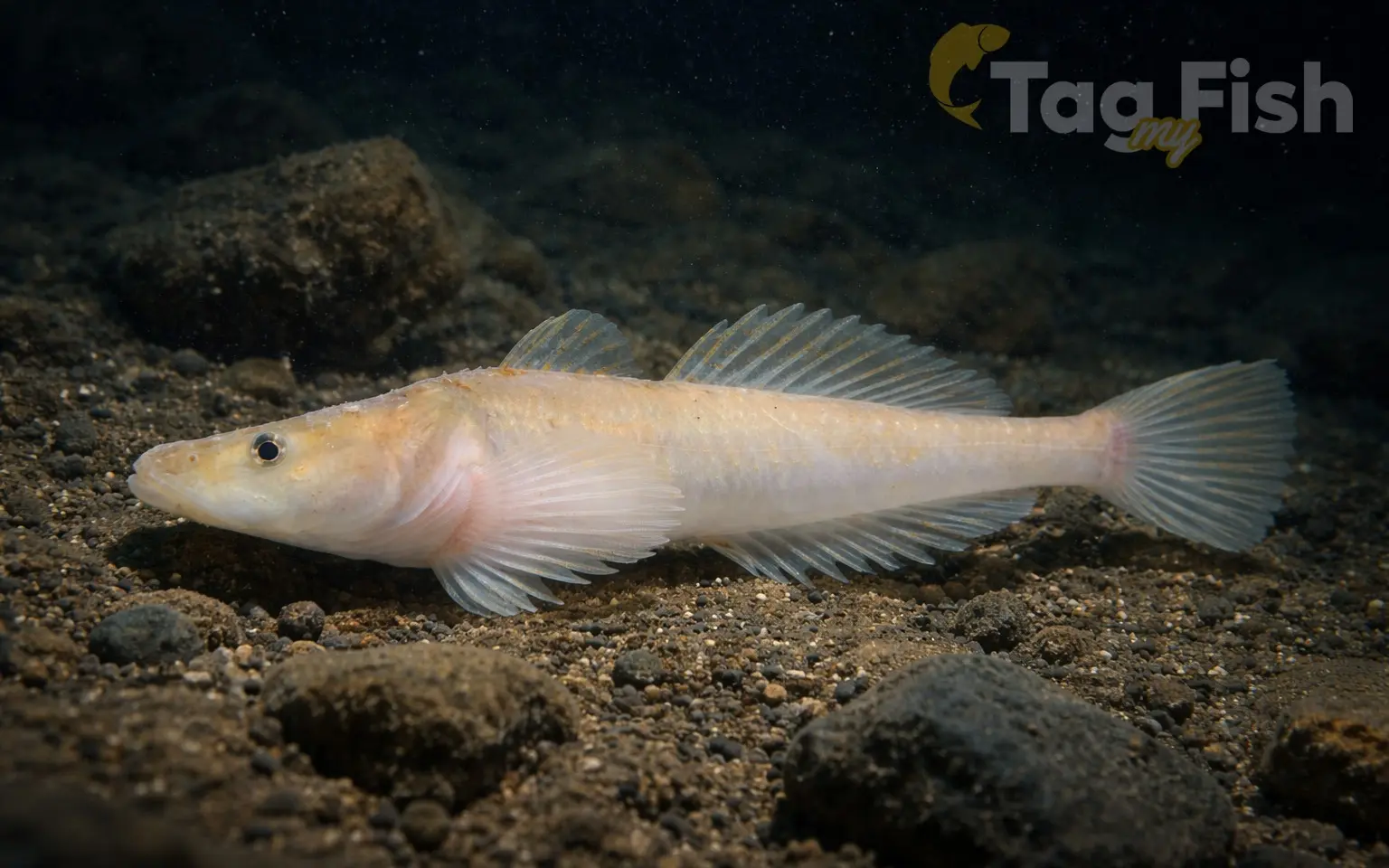
Image source: Created by ChatGPT
General data
- Main name: Small-eyed sculpin
- Climates: Continental
- Habitat: Freshwater
- Native: Asia
- Distribution: Lake Baikal
Classification
- Genus: Abyssocottus - Abyssocottus
- Family: Cottidae - Cottids
- Order: Scorpaeniformes - Mail-cheeked fishes
- Class: Actinopteri - Ray-finned fishes
- Superclass: Osteichthyes - Bony fishes

Abyssocottus korotneffi is a species of ray-finned fish belonging to the family Cottidae, the typical sculpins. This species is endemic to Lake Baikal in Russia, the world’s deepest and one of the oldest freshwater lakes. Like many Baikal sculpins, it is specially adapted to life in the cold, deep waters of the lake.
This fish inhabits great depths, occurring between about 120 and 1,600 meters, although it is most commonly found at depths of around 460–500 meters. These depths are characterized by very low temperatures, high pressure, and limited light, conditions to which Abyssocottus korotneffi is well adapted. The species lives close to the bottom and is considered a deep-water benthic fish.
Abyssocottus korotneffi has an elongated body typical of many deep-water sculpins. Individuals are relatively small, with males reaching a maximum total length of about 12.6 cm, while females can grow slightly larger, up to 13.2 cm. The species can live for up to 12 years, which is relatively long for a fish of its size and reflects the slow pace of life in deep-water environments.
Reproduction in this species involves relatively small numbers of eggs compared with many other fishes. Females usually carry around 20 eggs in each ovary. The eggs are relatively large, which is typical of deep-water species where larvae must be well developed when they hatch. Like other Baikal sculpins, Abyssocottus korotneffi forms part of the unique and highly specialized fauna that evolved within Lake Baikal over millions of years.
The genus Abyssocottus includes several deep-water species restricted to Lake Baikal, representing an important component of the lake’s endemic biodiversity. These fishes illustrate the remarkable evolutionary radiation that occurred in the isolated ecosystem of Baikal, where many species adapted to specific ecological niches in the deep waters of the lake.