 English
 Spanish
 German
 French
 Serbian
 Russian

Salmons and Trouts (Salmoniformes)
General data
- Main name: Salmons and Trouts
Classification
- Class: Actinopteri - Ray-finned fishes
- Superclass: Osteichthyes - Bony fishes

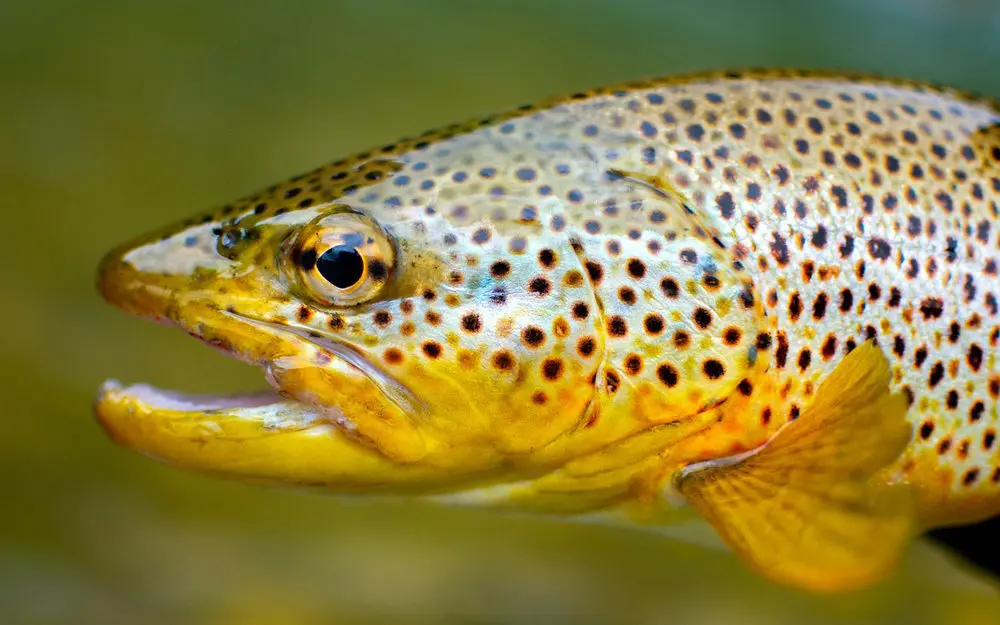
Salmons and trouts (Salmoniformes) are an order of ray-finned fishes best known for their ecological importance, migratory behavior, and value in sport and commercial fishing. They are native to the cold and temperate waters of the Northern Hemisphere, inhabiting both freshwater and marine environments.
This order includes salmon, trout, chars, freshwater whitefishes, and graylings. Many species are adapted to life in rivers and lakes, while others migrate between freshwater and the sea.
Salmoniform fishes typically have streamlined bodies suited for strong swimming. One of their most recognizable features is the presence of a small adipose fin located between the dorsal fin and the tail.
Many species are famous for their migratory life cycle. Some are anadromous, meaning they hatch in freshwater, migrate to the ocean to grow, and later return to rivers to spawn.
Feeding habits vary widely. Juveniles often feed on aquatic insects and plankton, while larger individuals may prey on fish and other aquatic organisms.
Species range from small freshwater forms to large migratory salmon capable of traveling vast distances and reaching significant sizes.
Salmoniformes play a vital ecological role as both predators and prey and are among the most important fishes for fisheries, aquaculture, and recreational angling.
The more catches you post, the higher your chances of winning this amazing prize.
Every catch shared between May and November 2025 is automatically entered into the prize draw.
Only one rule: Make sure to tag both the fish species and the body of water!