 English
 Spanish
 German
 French
 Serbian
 Russian

Pikes (Esociformes)
General data
- Main name: Pikes
Classification
- Class: Actinopteri - Ray-finned fishes
- Superclass: Osteichthyes - Bony fishes

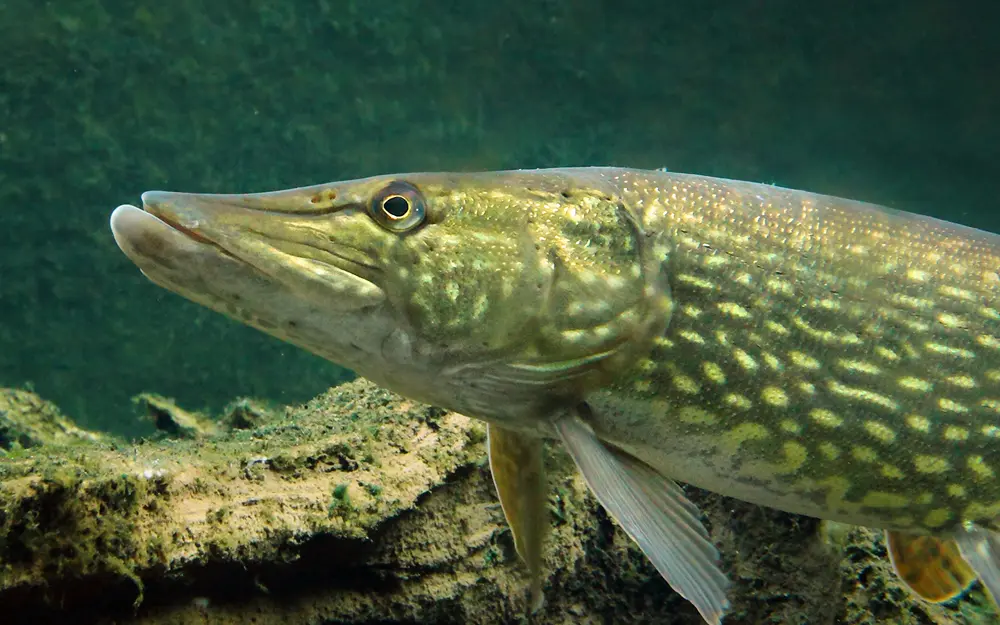
Pikes (Esociformes) are an order of freshwater predatory fishes best known for their elongated bodies, powerful jaws, and ambush hunting behavior. They are native primarily to the Northern Hemisphere and occur across North America, Europe, and parts of Asia.
This order includes pikes and mudminnows. While mudminnows are generally small and inhabit slow-moving or vegetated waters, pikes are among the top predators in many freshwater ecosystems.
Esociform fishes are easily recognized by their long, torpedo-shaped bodies, flattened snouts, and large mouths filled with sharp teeth. Their dorsal and anal fins are positioned far back on the body, providing strong acceleration for sudden attacks on prey.
Most species prefer lakes, rivers, marshes, and slow-flowing waters with abundant vegetation where they can remain hidden while waiting for prey.
Pikes are primarily carnivorous and feed on fish, amphibians, and occasionally small birds or mammals. They rely on stealth rather than speed over long distances, striking quickly when prey approaches.
Species within this order range from small mudminnows to large apex predators capable of exceeding one meter in length.
Esociformes play an important ecological role as top predators and are also highly valued in sport fishing due to their size, strength, and aggressive strikes.
The more catches you post, the higher your chances of winning this amazing prize.
Every catch shared between May and November 2025 is automatically entered into the prize draw.
Only one rule: Make sure to tag both the fish species and the body of water!