 English
 Spanish
 German
 French
 Serbian
 Russian

Carps (Cypriniformes)
General data
- Main name: Carps
Classification
- Class: Actinopteri - Ray-finned fishes
- Superclass: Osteichthyes - Bony fishes

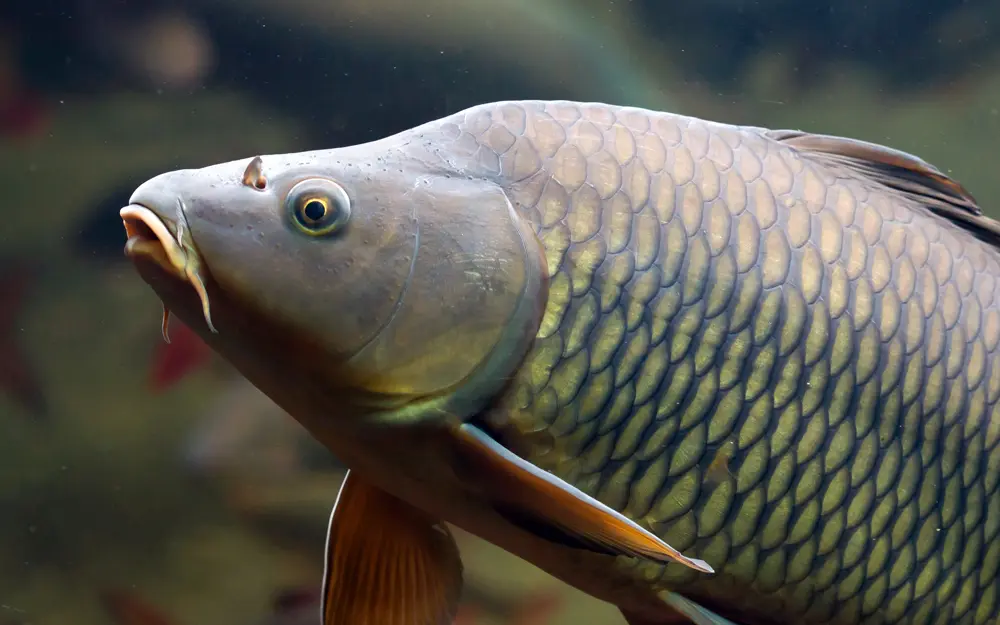
Carps (Cypriniformes) are one of the most diverse and ecologically important orders of freshwater fishes. They are widely distributed across Europe, Asia, Africa, and North America, inhabiting rivers, lakes, streams, ponds, and wetlands.
This order includes carps, minnows, barbs, danios, and loaches. While most species prefer calm or slow-moving waters, many are also adapted to fast-flowing mountain streams or seasonal floodplains.
Cypriniform fishes are easily recognized by the absence of teeth in their jaws. Instead, they possess specialized pharyngeal teeth located in the throat, which are used to grind plant material, invertebrates, or other food. Most species have a single dorsal fin and lack an adipose fin, which distinguishes them from some other freshwater fish groups.
Body shapes vary from slender, small minnows only a few centimeters long to large, heavy-bodied carps that can exceed one meter in length and weigh many kilograms.
Feeding habits are equally diverse. Some species are bottom feeders that consume detritus and benthic organisms, while others feed on plankton, algae, aquatic plants, or small invertebrates.
Cypriniformes play a crucial ecological role in freshwater ecosystems as both prey and predators, helping maintain balance within aquatic food webs.
This order also includes many species of major economic importance. Several are among the most widely farmed fishes in the world, while others are valued by anglers or kept as ornamental species in aquariums.
The more catches you post, the higher your chances of winning this amazing prize.
Every catch shared between May and November 2025 is automatically entered into the prize draw.
Only one rule: Make sure to tag both the fish species and the body of water!