
Lake Poteriteri
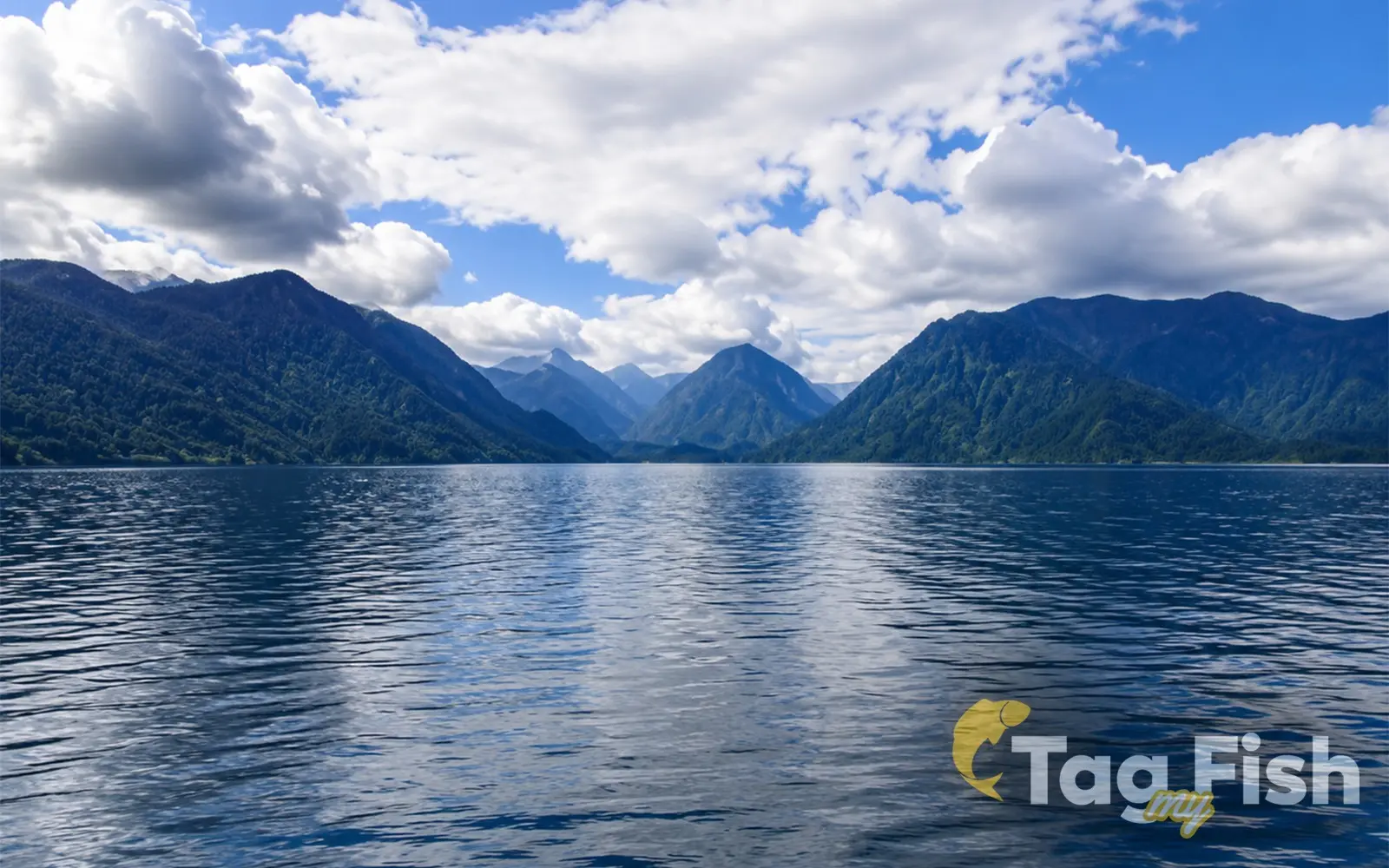
Image source: Generated by ChatGPT using an old reference photo
General data
- Name: Lake Poteriteri
- Water system: Waitutu River
- Water type: Natural lake
- Progression: Waitutu River -> Foveaux Strait -> Tasman sea -> Pacific Ocean -> Planet Earth
- Climates: Temperate
- Continents: Australia & Oceania
- Countries: New Zealand

Lake Poteriteri is one of the most remote and least-visited lakes in New Zealand, located in the southern part of Fiordland National Park on the South Island. It is the southernmost of Fiordland's large lakes, with only Lakes Hakapoua and Innes lying further south. The lake is situated about 40 km (25 mi) west of the town of Tuatapere, surrounded by steep forested mountains and pristine wilderness.
The lake stretches approximately 28 km (17 mi) from north to south while averaging less than 2 km (1.2 mi) in width. Covering an area of about 43 km² (17 sq mi), it occupies a deep glacial valley formed during the last ice age. Its only outflow is the Waitutu River, which flows for about 8 km (5 mi) before emptying into Foveaux Strait and ultimately the Southern Ocean.
The origin of the lake's name remains uncertain. One interpretation suggests the Māori word means "to drift forwards and backwards." Another theory proposes the original spelling was Poutiritiri, meaning "a post on which offerings are hung," while a third suggests Poeteretere, translated as "dripping wet," reflecting the region's exceptionally wet climate.
Lake Poteriteri is extremely difficult to reach. Most visitors arrive by helicopter, while experienced trampers can access the area via Harry's Track from Lake Hauroko or by following rough deer trails through dense Fiordland rainforest. Its isolation has helped preserve its untouched natural character and rich biodiversity.
The lake supports a healthy population of brown trout (Salmo trutta), which were introduced to New Zealand in the 19th century and have established self-sustaining populations throughout Fiordland. Anglers occasionally visit the lake by helicopter or during multi-day backcountry expeditions. Fishing is generally best from boats or around river mouths and is renowned for its wilderness setting rather than high catch numbers. The Waitutu River also provides habitat for brown trout as well as several native fish species.
Native fish found in the Lake Poteriteri and Waitutu River catchment include the longfin eel (Anguilla dieffenbachii), shortfin eel (Anguilla australis), giant kōkopu (Galaxias argenteus), New Zealand lamprey (Geotria australis), and common bully (Gobiomorphus cotidianus). These species migrate through the river system and contribute to the ecological importance of this remote Fiordland watershed.